Monday, May 19, 2014

M104 the Sombrero Galaxy with Canon T5i from Fixed Tripod

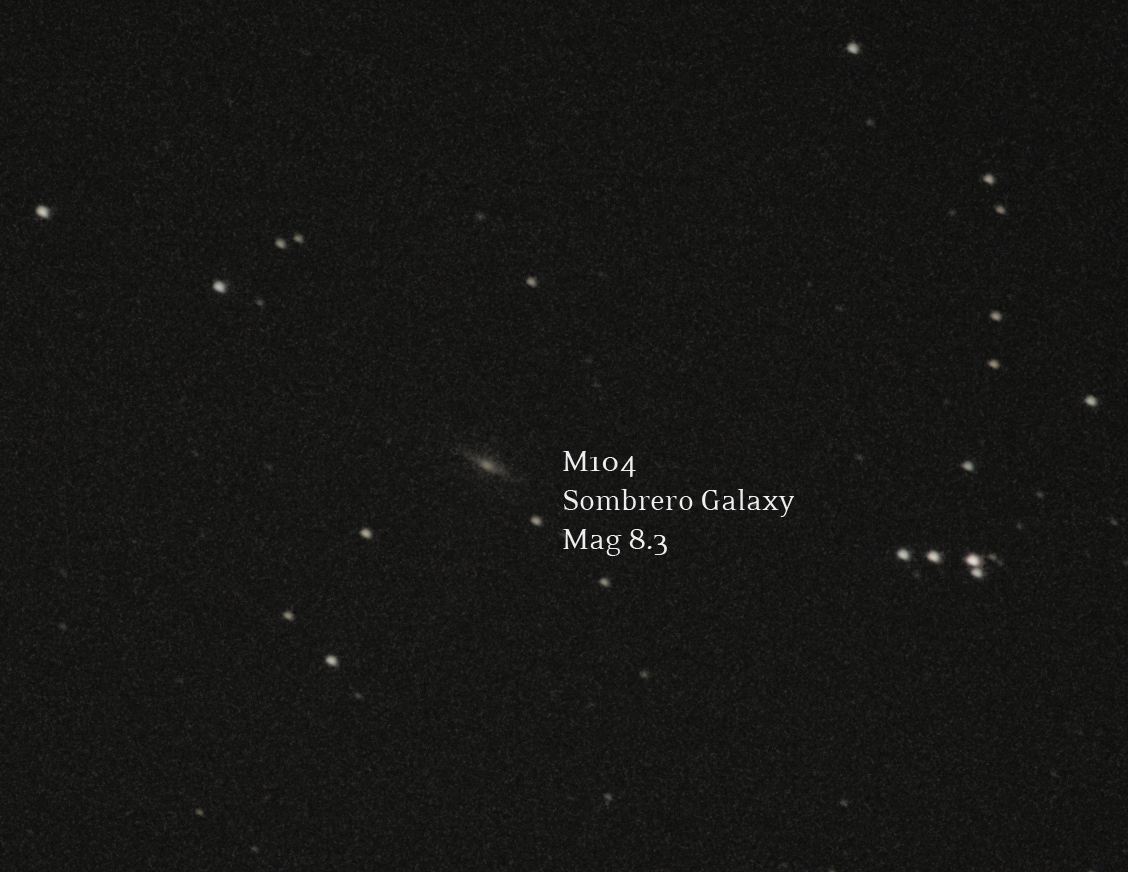
Messier 104, the Sombrero Galaxy is a spiral galaxy in the constellation Virgo. It's very picturesque, and one of my favorite galaxies to look at. This was my first time attempting to photograph M104, and until the object appeared on the May 2014 observing list, I had no idea it would even be visible to my Canon T5i using a fixed-tripod technique.

M104 brings my Messier Object total up to 55 out of 110!

M104 the Sombrero Galaxy
M104 cropped and labeled from original image (below)

M104 the Sombrero Galaxy
Sombrero Galaxy cropped from image below

M104 the Sombrero Galaxy
M104, stack of 123 subs, 71 dark, 53 bias frames, each at ISO 6400, 300mm, f/5.6, 1.3 sec
Total exposure time 2 min 38 sec.

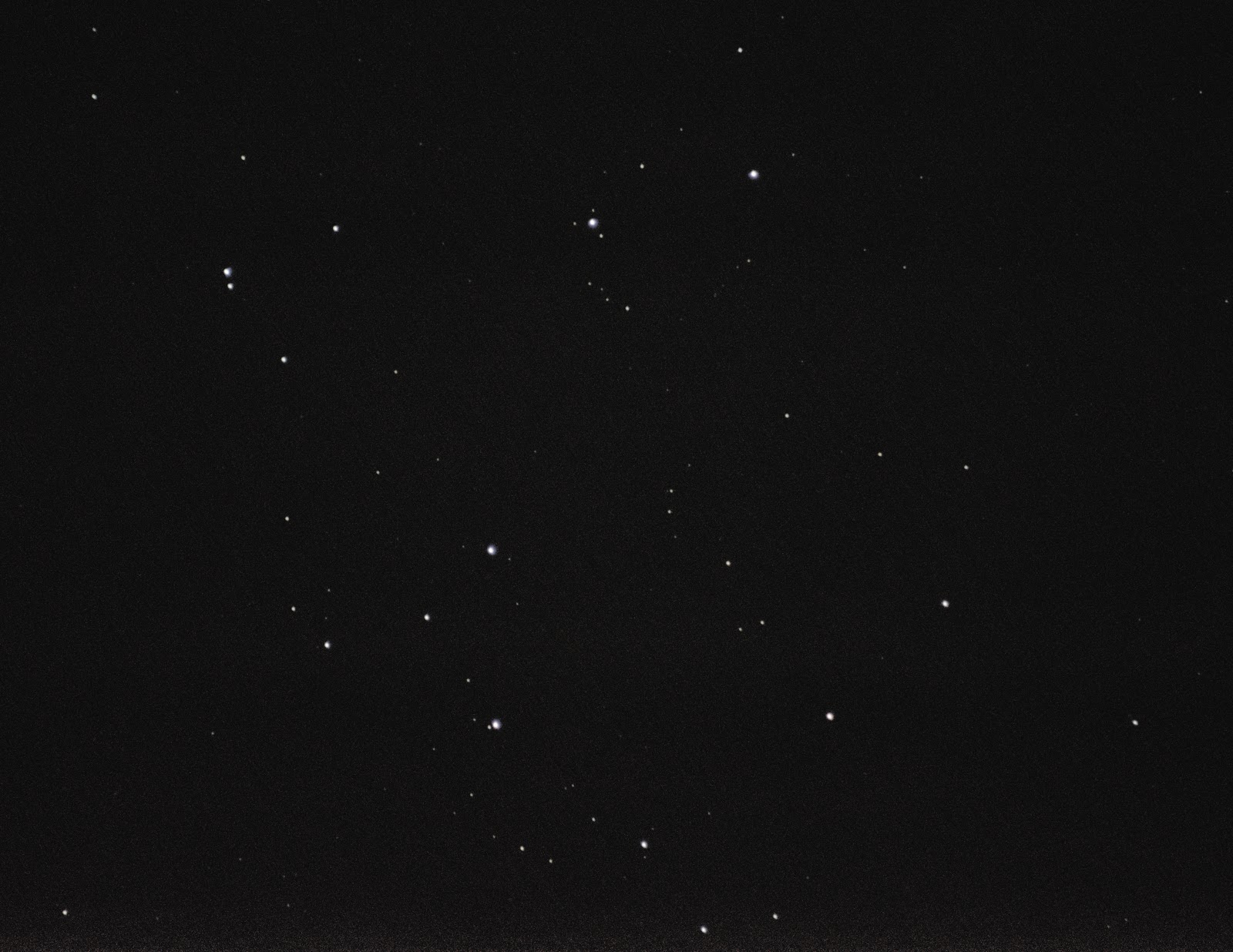
Coma Star Cluster (Melotte 111) in Coma Berenices

I'm familiar with Coma Berenices from last summer, but I was excited to get to know it a little better with a few objects on the May 2014 observing list. The Coma Star Cluster, or Mel 111 from the Melotte catalogue, is an open cluster of stars that sort of reminds me of the Hyades because of it's vague heart or V shape. This is a very busy piece of sky, but most of the stars are not visible to the naked eye from my location in central Indiana.

Coma Star Cluster
Coma Star Cluster, stack of 21 subs each at ISO 3200, 300mm, f/5.6, 1 sec with Canon T5i on fixed tripod

Coma Star Cluster in Coma Berenices
Coma Star Cluster (Mel 111) with labels

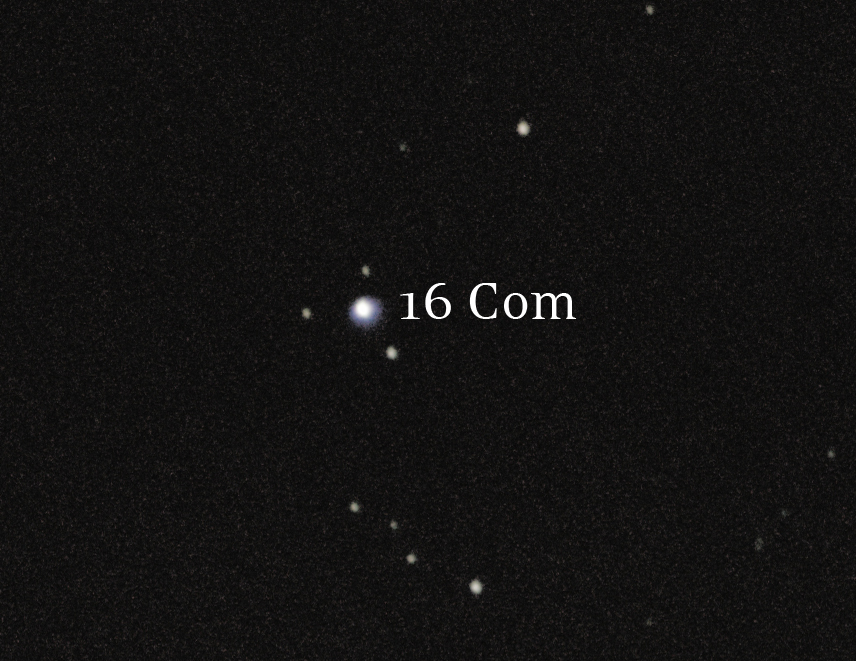
16 Comae Berenices (16 Com)
Crop from above photo, 16 Comae Berenices (16 Com) looks especially cool with its 3 faint neighbors

Tuesday, May 13, 2014

How to Locate HD 162826 "Sun Sibling" in Hercules

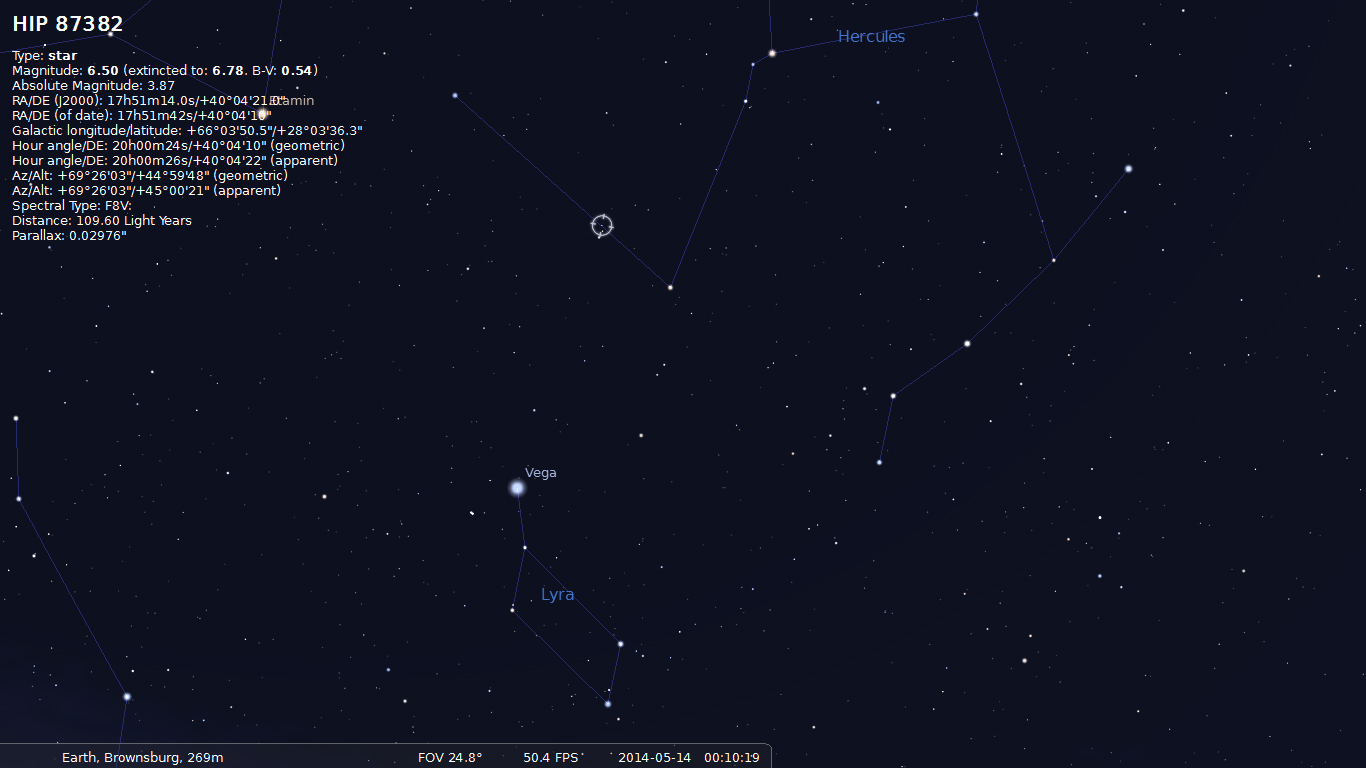
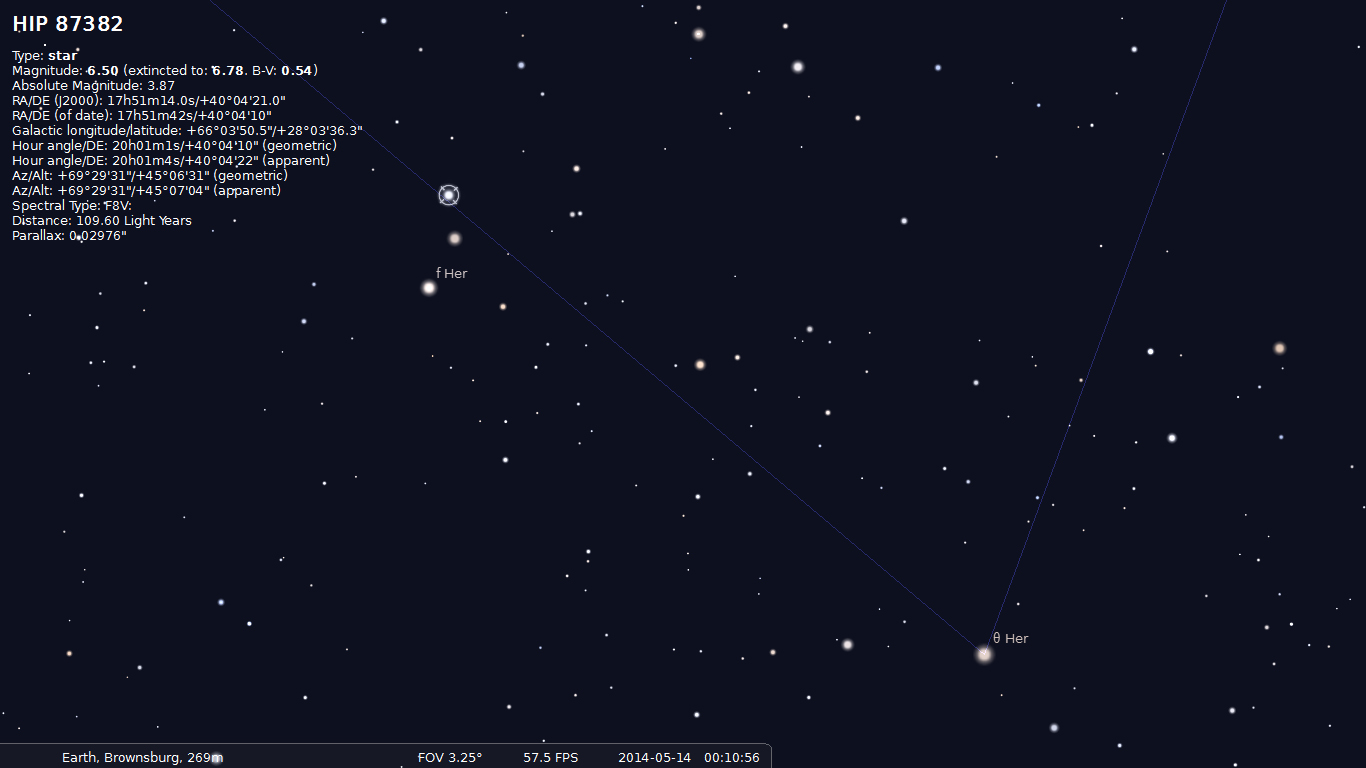
You might have seen recent news items about the Sun's sibling star or "sister star" identified as HD 162826 in the constellation Hercules. If you try to locate this star in Stellarium or other star charts, it might not immediately appear because this star goes by many other names.

According to Wikipedia, other designations include 2MASS J17511402+4004208 , GSC 03093-01946 , TYC 3093-1946-1, BD+40 3225 , HD 162826 , HIP 87382 , HR 6669 , SAO 47009.

In Stellarium, the star is labeled HIP 87382 from the Hipparcos Catalogue.

Locate HD 162826 sub sibling
Location of HD 162826, aka HIP 87382, relative to Vega (Screenshot: Stellarium)
find HD 162826 sub sibling
Location of HD 162826 in Hercules (Screenshot: Stellarium)

Monday, May 5, 2014

First Quarter Moon Through Canon T5i Live View

My plan was to take a video with my Canon T5i to demonstrate how shaky the camera is on the tripod with and without my 2.5 pound weight. I noticed that without the weight, my shifting body weight on the deck produced more movement - but with the weight, touching the camera produced more movement. Interesting...

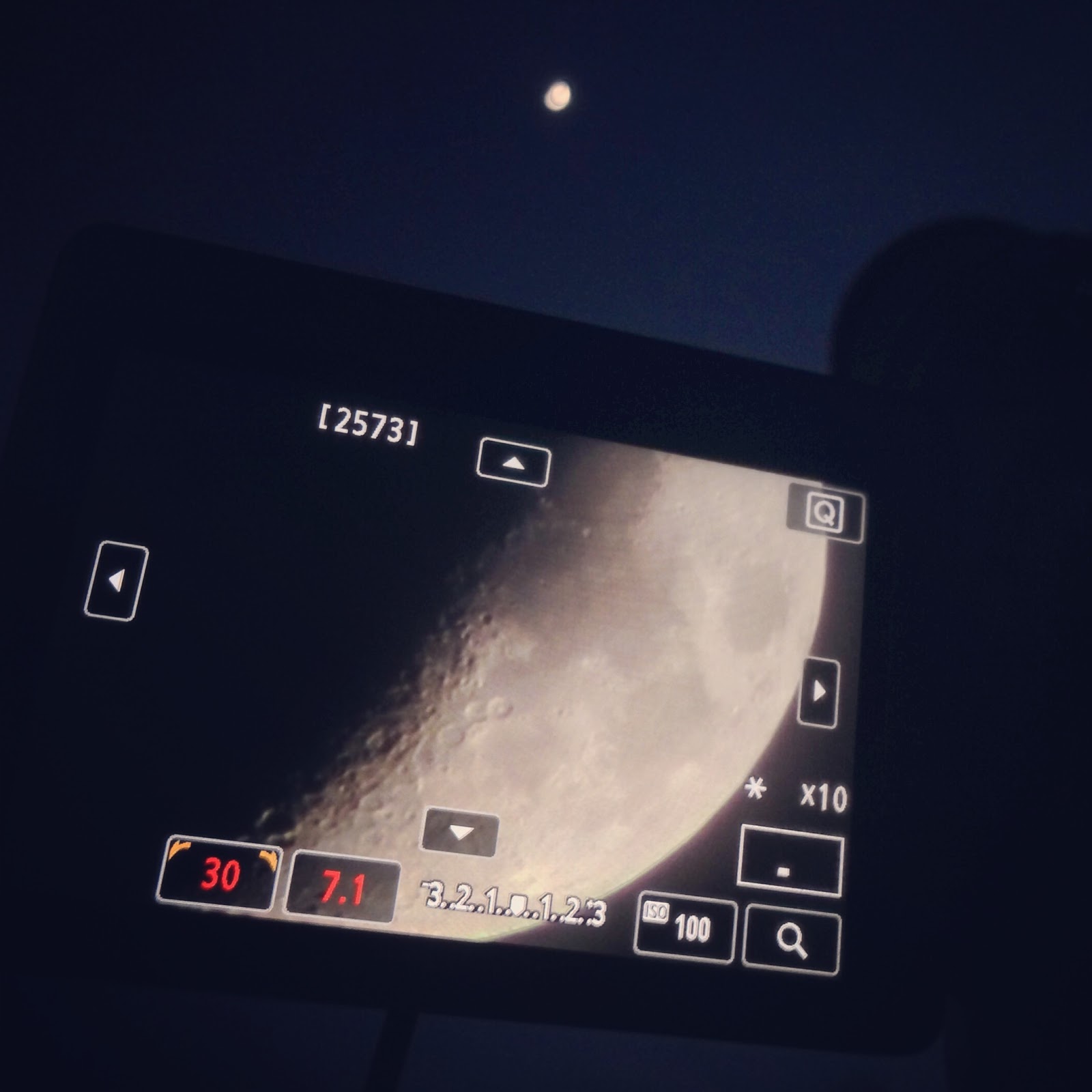
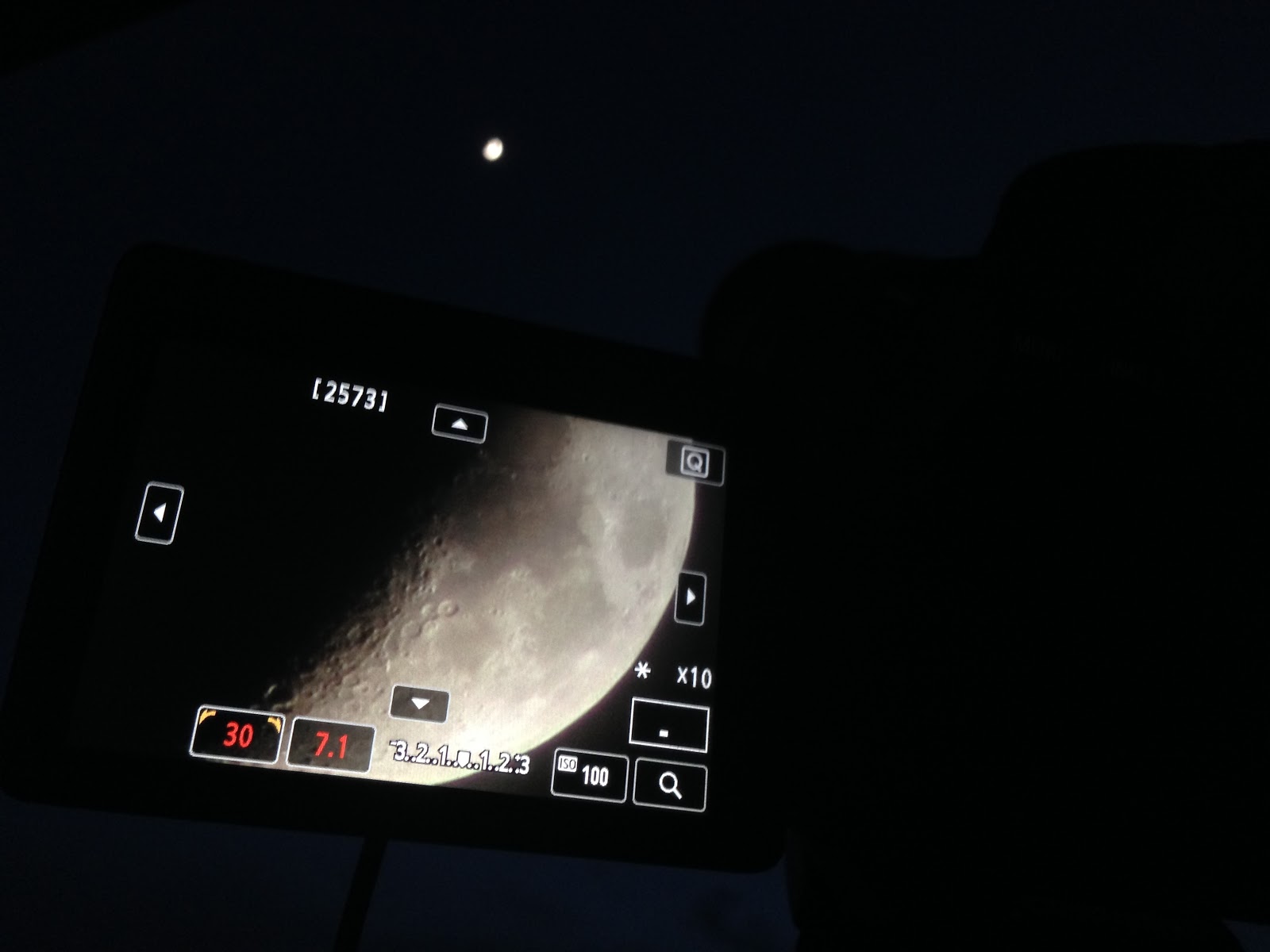
Anyway, while I was adjusting the camera and trying to focus on the moon through a thin veil of clouds, I noticed how useful my camera's live view feature is - especially when I used digital zoom to crop in an additional 10x magnification. I adjusted the focus manually after digital zooming, and it was surprisingly good considering I rarely manual focus on anything through the viewfinder.

quarter moon live view
Waxing quarter moon at 300mm, f/7.1, ISO 100, video mode live view 30 fps, and additional 10x digital zoom
moon canon live view
Instagram filter on the photo below lighting up the sky a bit
moon canon live view
Moon with Theophilus crater clearly visible (May observing list check!)

This live view observing technique might be useful at outreach events to the public - it's surprisingly clear with just a 300mm telephoto lens, and the large display screen makes it easier for multiple people to view at the same time - or for people who have difficulty looking through an eyepiece. Then again, there's something more authentic about looking down through an eyepiece that makes it more fun. If I wanted to look at the moon on a screen I'd go online.

Next on my list of things I should have already done but haven't done yet: Finally installing my drivers to tether my camera to my laptop to live view on my screen! One of these days...

Sunday, May 4, 2014

May 2014 Indiana Astronomical Society Novice/Urban Observing List

Phil Dimpelfeld from the Indiana Astronomical Society creates a Novice/Urban Observing List each month for newbies like myself with not-so-dark skies and not-so-powerful equipment. Phil recently announced the addition of a Level 1 list for true beginners to get familiar with important and recognizable objects. I'll continue pursuing the Level 2 list with slightly more challenging objects.


Last month I got 6 objects in one night thanks to their close proximity to each other in the constellation Leo.


This month, I'm looking forward to four Messier objects that are new to me, which will hopefully bring my Messier total up to 58. These objects include my personal nemesis M64, the Black-Eye Galaxy that I maybe sorta saw in one wide field image, but could never track down again.

Also this month, we might have a chance to see a new meteor shower on the nights of May 23 and 24, with an unknown rate of meteors! Estimates for this new Camelopardalids meteor shower (as it's unofficially known) are between 100-1000 meteors per hour!
Camelopardalids
Camelopardalids
Camelopardalids


Mel 111, the “Coma Star Cluster”, Open Cluster in Coma Berenices, 12h 25.0m, +26° 00', mag = 1.8, size = 275' (Use your binoculars for this one – it’s big!)

Mars, planet currently in Virgo, 12h 43m, -2° 58’, mag = -0.95, size = 14.5”

M94, Spiral Galaxy in Canes Venatici, 12h 50.9m, +41° 07', mag = 8.1, size = 11' x 9.1'

Alpha Canum Venaticorum, “Cor Caroli”, Double Star in Canes Venatici, 12h 56.0m, +38° 19', mag = 2.9, 5.5, sep = 19.4"

M64, the “Black-Eye Galaxy”, Spiral Galaxy in Coma Berenices, 12h 56.7m, +21° 41', mag = 8.5, size = 9.3' x 5.4'

M53, globular cluster in Coma Berenices, 13h 12m, +18° 10′, mag = 8.3, size = 13’

Zeta and 80 Ursa Majoris, “Mizar” and “Alcor”, Double Stars in Ursa Major, 13h 23.9m, +54° 56', 2.3, 4.0, 4.0, sep = 14.4", 709". It is sometimes rumored that being able to split Mizar and Alcor naked eye is a test of your eyesight. But actually, it is really a test of how dark your sky is! At magnitude 4.0, Alcor is easily washed out by light pollution.

M51, the “Whirlpool Galaxy”, spiral galaxy in Canes Venatici, 13h 29m, +47° 11′, mag = 8.4, size = 11′ × 7’. The companion galaxy NGC 5195 can often be seen in close proximity to M51.

M3, Globular Cluster in Canes Venatici, 13h 42.2m, +28° 23', mag = 5.9, size = 16.0' (Located about a third of the way from Arcturus to Cor Caroli. It’s bright enough to be seen as a smudge in binoculars from suburban skies.)

Theophilus, crater, first quarter Moon

Palus Epidemiarum, small mare, last quarter Moon

Challenge Object:
✔ M104, the “Sombrero Galaxy”, Spiral Galaxy in Virgo, 12h 40.0m, -11° 37', mag = 8.3, 8.9' x 4.1'