Friday, February 13, 2015

iPhone 6 on Carson Universal Telescope Adapter

universal iphone telescope adapter mount
iPhone 6 on Carson Universal adapter mounted onto Meade 285 refracting telescope.

It came! The Carson Universal adapter is a clever optical adapter that lets you mount almost any smartphone onto almost any optics. The iPhone 6 is a big phone, will it work? Let's see... first things first, let's savor the unboxing experience...

dog and brown packagecarson universal package front


carson universal package front

carson universal package back

carson universal unboxing
The inner white box reminds me of an Apple product

carson universal unboxing

carson carrying case
carson carrying casecarson carrying case


The case is very nice quality, and the clip on the side is handy. The adapter fits snug and has a custom foam cutout to store it securely. When I first opened the carrying case clam shell, the first thing I noticed was that the adapter was cold to the touch. The back plate is hard and sturdy, I can't tell if it's metal or not - which is weird - but it's very light yet sturdy.

carson lens spacertutorial reminder

It comes with a lens spacer in case you have optics that need to have the camera back a little further. I have an eyepiece that has a larger light cone because I can look through it without removing my glasses, so this seems perfect. There is a little piece of tape reminding you to look at the tutorial videos before you mess with it, so let's look at one now...


Ok, this is all fine and well - but how well does an iPhone 6 fit into this adapter? Let's take a look. The case on my phone is a clunky Ballistic brand case. For convenience, I first tried my phone in the Carson Universal with the case on. It technically fits, but the corners on my case are irregular shapes, not a clean square case, so it makes it more of a hassle. I think I'll just take my case off and give it a better fit.

iphone 6 volume buttons

iphone headphone jackiphone telescope adapter mount

The buttons are all un-obscured when the phone is in the adapter. Whew! Best of all, the headphone jack is exposed so I can use a volume button shutter remote.

iphone telescope adapter mountcarson universal back


iphone 6 camera and telescope mount
Hi there! The iPhone 6 camera lines up through the adapter, even though the camera for the iPhone 6 is waaaay up in the top corner of the phone. 

Now, the iPhone 6 is a huge phone - it's both long and kinda heavy, and both of these variables play into an important issue with any adapter. I'm talking about the tendency for the clamps to slip and the phone to slowly pivot out of alignment. This adapter does it better than others I've seen, but the design of the phone makes it as hard as it possibly can be to keep it aligned.

carson universal grip
A nice firm grip is important, and these 4 rubbery nubs are very tacky and grip onto the sides of the eyepiece. 
perfect alignment iphone to telescope
The Carson Universal adapter does an amazing job hanging on and keeping the camera centered over the eyepiece. But it can't stop gravity, so if you move it around too much it will eventually droop. No big deal!

iphone adapter droop on eyepiece

If you have the telescope near horizontal or 45 degrees, and then move it around too much, the weight of the phone can overcome the coefficient of friction between the nubs and the eyepiece - which causes the adapter to droop. Let me tell you, this adapter is so much better than trying to wrap paper around the eyepiece to hold things on.

It's less of an issue the closer to vertical you are, because the moment arm is smaller. That's the perpendicular distance between the force vector and the axis. In this case the force vector is pointing straight down (gravity) and the axis is the attachment point. The length of the phone doesn't change, and the weight of the phone doesn't change, so moving further away from horizontal decreases the torque at the moment arm.

torque of iphone adapter around eyepiece

carson universal adapter with iphone

Ok, thanks for checking out my unboxing post that got WAY OUT OF HAND and way too long! Next up, I just need a clear night to test this bad boy out. Check it out on Amazon.

Thursday, February 12, 2015

iPhone Night Photos with Manual Custom Exposure Camera App

New iPhone camera functionality in iOS 8 allow third party apps to open up manual exposure settings for iPhone photos. This is particularly interesting to anyone already familiar with DSLR settings, people who want full control of their exposures, and people like us (me and probably you too) who want to push certain aspects of the camera settings to continue pioneering into the realm of iPhone night sky photography and iPhone astrophotography.

I won't do as detailed an article as iPhone Photography School, so I recommend their post titled How To Use The New iOS 8 Manual Camera Controls.

I'll focus on one great app called "Manual - custom exposure camera" for now - but trust me there are more great apps on the way and I have my eye out for new useful tools all the time!


This app is simple and does the trick. The menu to change ISO can get stuck scrolling sometimes as your finger touches off the side of the scroll bar - and when the scroll bar pops up it covers up the shutter and dashboard section. But all in all it does the job and was very intuitive. I didn't have to read anything about how to use it to just dive right in.

You'll notice below that the Manual app only goes up to ISO 1600 where even the default iPhone camera chose to push the ISO even higher, but the default camera didn't compensate with longer shutter so the final image is much darker.

manual iphone camera exposure
iPhone, handheld, Manual app, f/2.2, 1/2 sec, ISO 1600, 4mm

bad iphone night shot
iPhone, handheld, default camera, f/2.2, 1/15 sec, ISO 2000, 4mm
Pretty huge right? Even handheld the 1/2 sec exposure was manageable and clearly lets in more light than the 1/15 sec shutter the default camera app chose for me. Now let's go for some stars...

bad iphone night shot
iPhone, handheld, default camera, f/2.2, 1/15 sec, ISO 2000, 4mm

manual iphone camera exposure
iPhone, handheld, Manual app, f/2.2, 1/2 sec, ISO 1600, 4mm
I also ordered a Carson Universal that should be here tomorrow! I can't wait to try out manual iPhone camera settings on the moon, Jupiter, and maybe even Orion Nebula. I'm excited! Check out Matt's post about the Carson Universal over at iAstrophotography.com. Clear skies!

Sunday, February 1, 2015

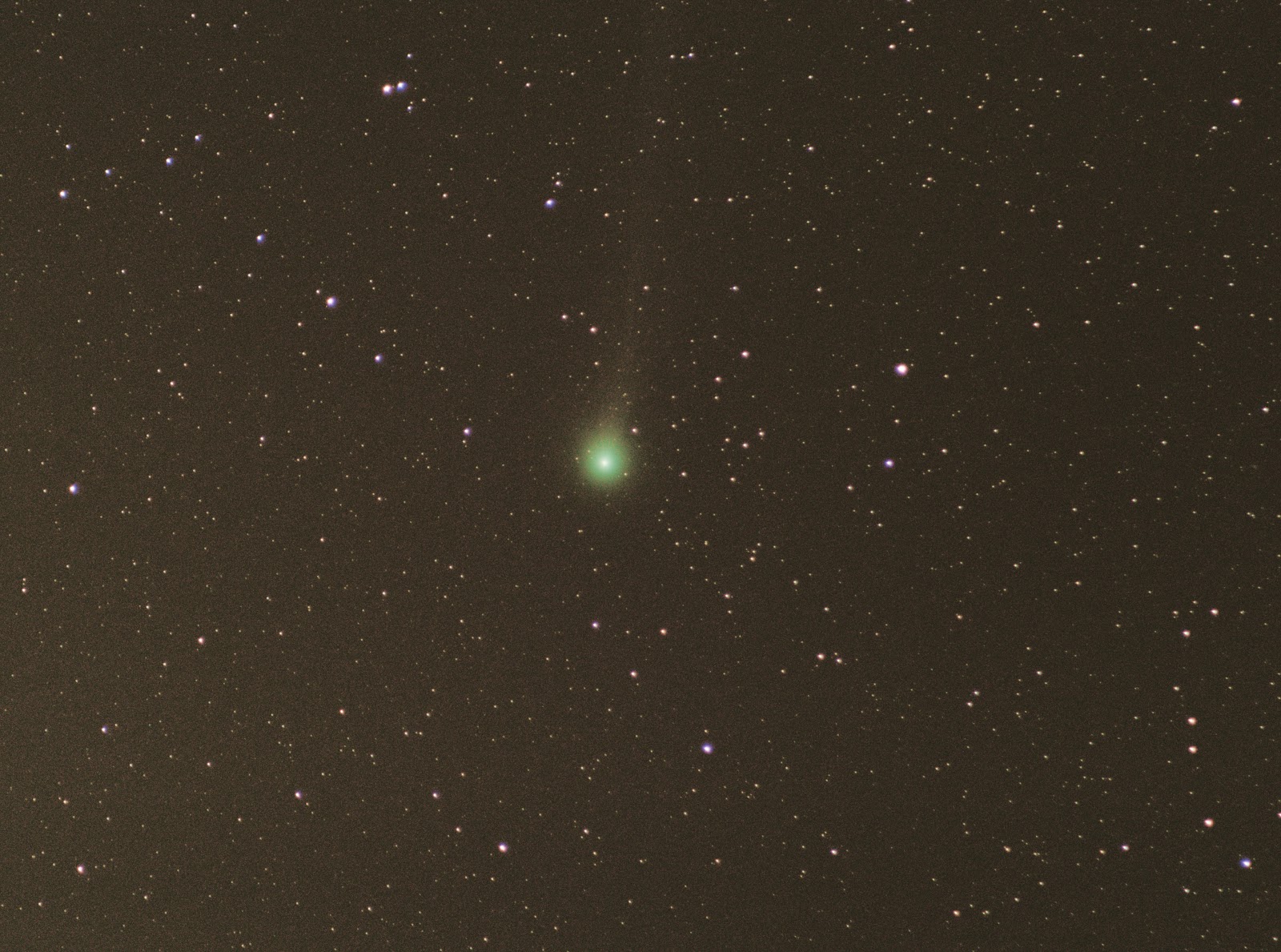
Comet Lovejoy (C/2014 Q2) with DSLR on Motor EQ-1 Mount

I'm getting better at polar-aligning my motor driven EQ-1 mount, and increasing the total exposure length I can achieve without star trails. However, now I'm running up against another barrier - I'm getting to the point where my sky conditions have too much light pollution to even merit longer exposures.

long exposure without star trails DSLR
My longest single frame without star trails (left) straight from the camera. I love the aqua color of the comet without any processing! Stacking always seems to make it a dull green.
ISO 1600, 300mm, f/5.6, 20 seconds, Canon T5i on motor driven EQ-1.

With the sky beginning to wash out even after 20 seconds, you can tell that my techniques are advancing up against another ceiling, the sky conditions themselves. Even if I did have a super fancy tracking mount, would it even be worth it if I can only get exposures of 20 seconds?

comet lovejoy DSLR 300mm
Comet Lovejoy C/2014 Q2 with Canon T5i on EQ-1 mount
Stack of 31 light (ISO 1600, 300mm, f/5.6, 13 sec), 21 dark, 23 bias, and 15 flat frames
Processed in DSS

comet lovejoy DSLR 300mm
Comet Lovejoy C/2014 Q2 with Canon T5i on EQ-1 mount
Stack of 31 light (ISO 1600, 300mm, f/5.6, 13 sec), 21 dark, 23 bias, and 15 flat frames
Processed with layers from both DSS and Photoshop

And yes, I'm using flat frames like a good boy! Every time I learn something new it seems to make my imaging procedures longer not shorter! Flats make a big difference though, it's like the "eating your vegetables" of astrophotography. I used the same technique I talked about in this previous post.

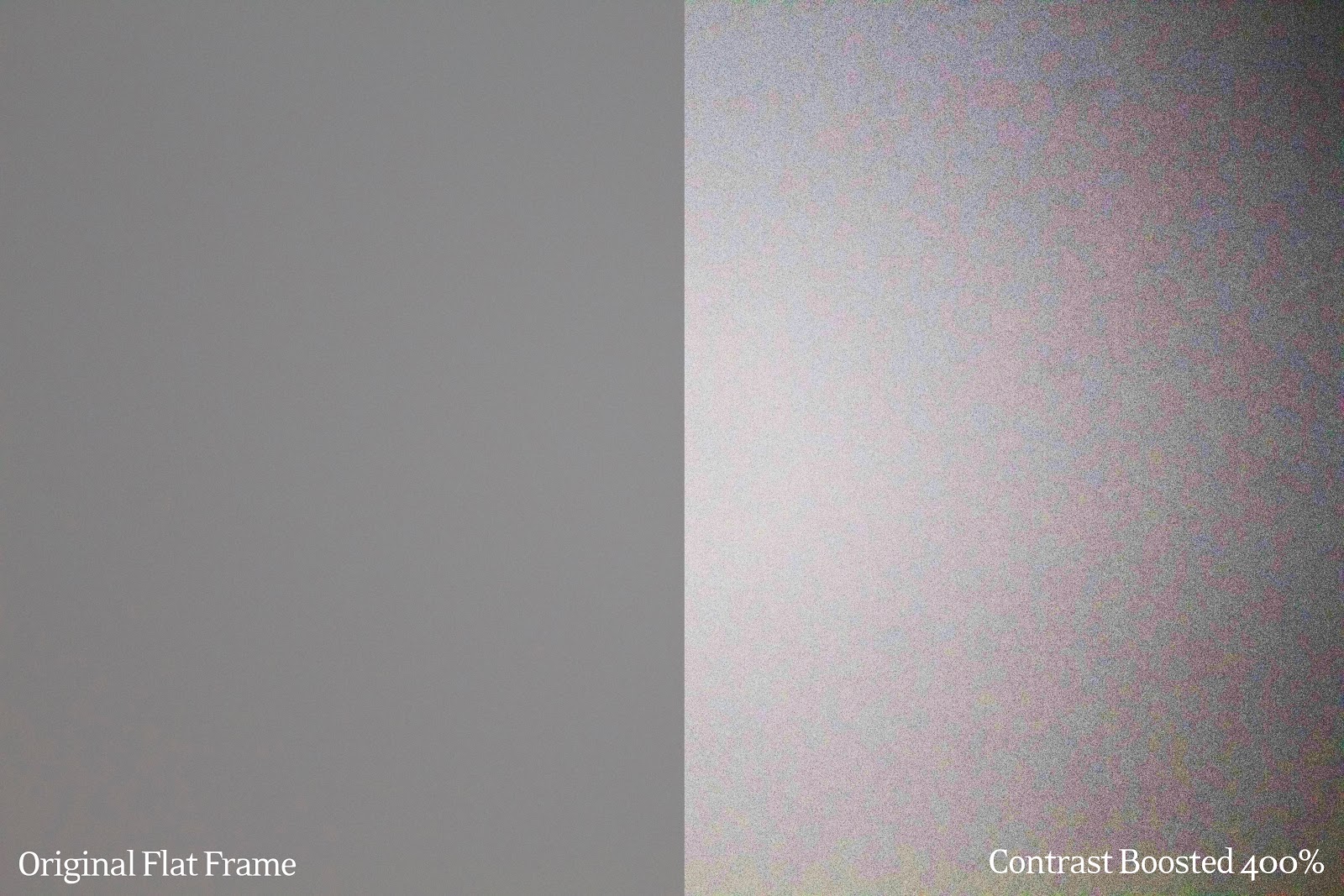
Flats should be gray, not white. Below is a sample of one of the flat frames (left) and that same frame with the contrast turned WAY up (right) to show that there really is some gradient and vignette information there even though to the naked eye it just looks like an even gray wash. The purpose being that the image processor, such as Deep Sky Stacker, will remove the hot spot gradients and corner vignettes.

flat frame compare with contrast gradient
One of my flat frames with contrast boosted on one side to show gradient information hidden within. Adjust exposure time until you get a good histogram just to the left of center. This one happens to be ISO 1600, 300mm, f/5.6, 1/640 seconds.

take flat frames with computer screen
Taking flat frames with DSLR - I actually took them hand-held as close to the screen as possible while moving the camera around to make sure I didn't get a dust spot in the same place each time.

Monday, January 26, 2015

Moon Rock Displays and Peekskill Meteorite

Not that it's a competition, but I couldn't help but notice differences in the moon rock displays in the National Air and Space Museum compared to the National Gem and Mineral Collection at the Museum of Natural History. What do you think? Who showed it best?

moon rock displays
Moon rocks displayed at (L) the National Air and Space Museum, and (R) the National Gem and Mineral Collection in the Museum of Natural History
Let's take a step back and look at the display case for each. I'm realizing half way though this post that I sound like a real jerk judging the displays - when really just seeing moon rocks in person is totally awesome and mind blowing. But I couldn't help but notice a big difference!

apollo moon rock
Displays at the National Air and Space Museum look a little dated, the display window is foggy, and the lighting is flat
gem collection moon rock
Moon rock in the National Gem and Mineral Collection looks futuristic and befitting a moon rock! The light sources are hidden, and the light is crisp white
Here's another interesting anecdote - the gem collection has a lot more meteorites than the Air and Space Museum, and when I was in the gift shop I asked about buying small meteorites. The person behind the counter said they no longer sell them and alluded to a controversy, saying that the 'air and space guys' decided meteorites were their 'thing,' and that the gem collection gift shop shouldn't be able to carry them. Museum gift shop turf war!

Speaking of other items in the gem collection, here is a meteorite celebrity of note... the Peekskill meteorite!

meteorite that hit car
Peekskill is famous for being caught on multiple video cameras and smashing into the trunk of a car

peekskill meteorite
Peekskill meteorite

Sunday, January 18, 2015

Best Photos of the Year for 3 Year Blog Anniversary

January 28, 2012 was the day I learned that my point and shoot camera has a long exposure mode. This brought the night sky much closer to home, and started me down a path I'd never imagined! This is turning into a blog anniversary tradition to look back over the past year and reflect on my favorite and/or best photos of the year, just like I did for year 1 and year 2 of informed stargazing and night sky photography.

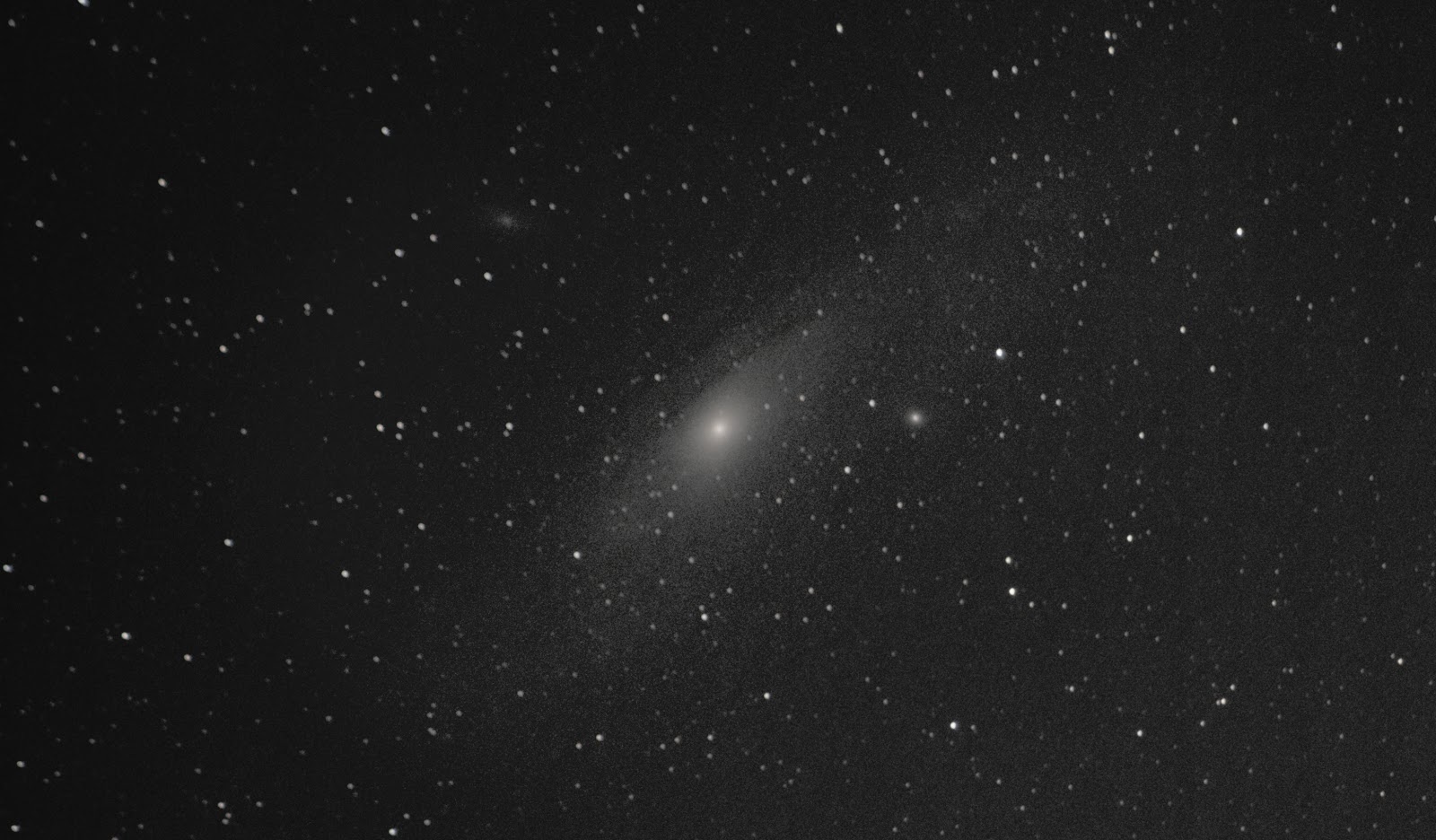
andromeda
Personal best Andromeda and first successful run with my EQ-1 motorized mount. I owned the mount for months before getting the chance to really do it justice, and it's been paying off ever since. It takes a lot of work, but it is like night and day.
meteor
A super nice Perseid meteor with change in color and perfect javelin shape. This was really the year of the meteor photos even though I didn't get any Geminids like I did the past 2 years. This is probably my most colorful and possibly best meteor.
meteor
Huge Camelopardalids meteor with visible smoke trail, as seen in this animated GIF I made using multiple frames. This was a new shower, and I really lucked out! This is the real deal, it made me really feel like an astrophotographer!
asteroids animation
Change in Ceres and Vesta positions in 24 hours, as shown in this animated GIF from two different nights. This was also the year of the animated GIF, I really like this image and it took a ton of work!
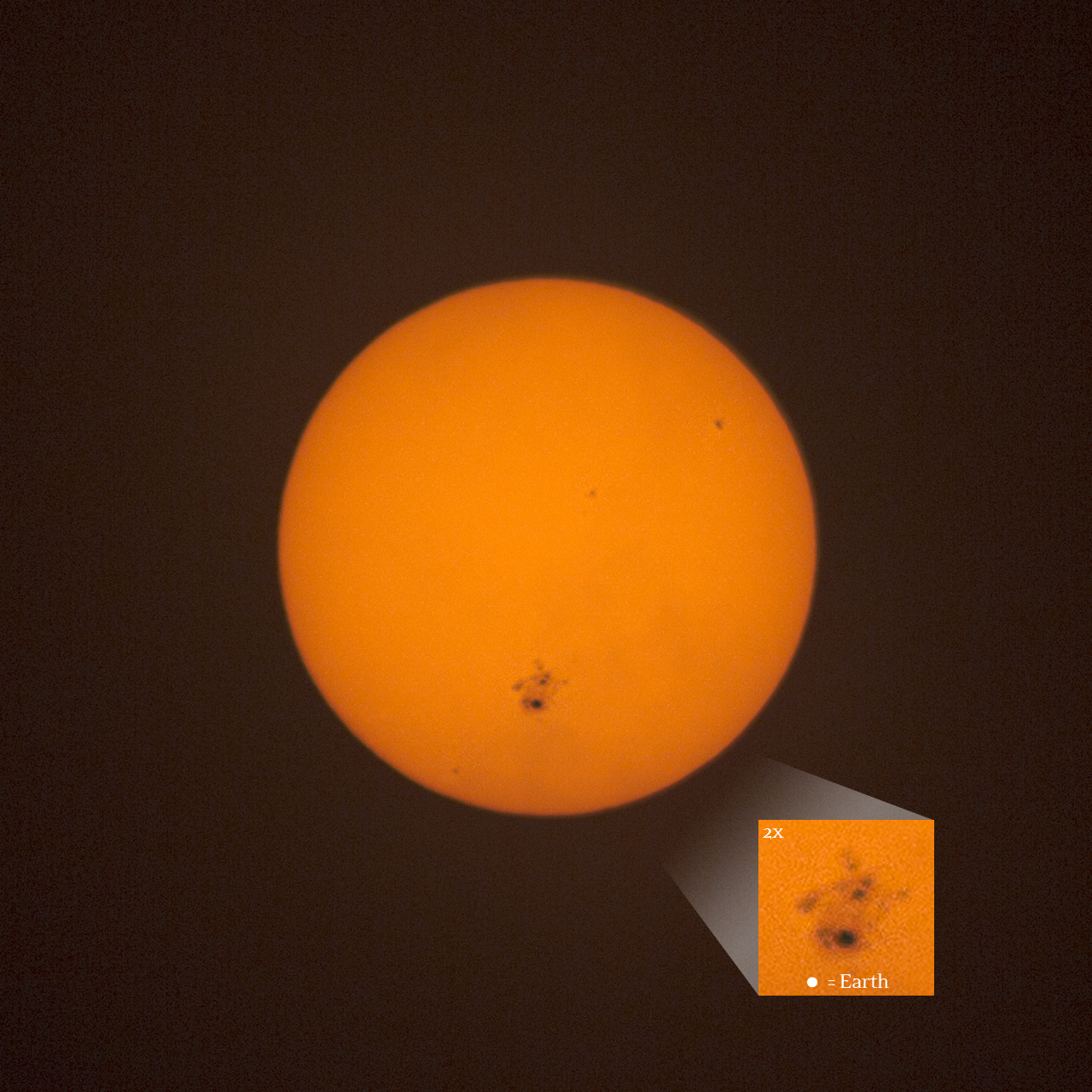
sunspot
The year I entered into solar photography, and a gigantic sunspot! I made my own solar filter for my camera with a sheet of black polymer and was able to get a totally new view of the sun. A real milestone!
solar eclipse
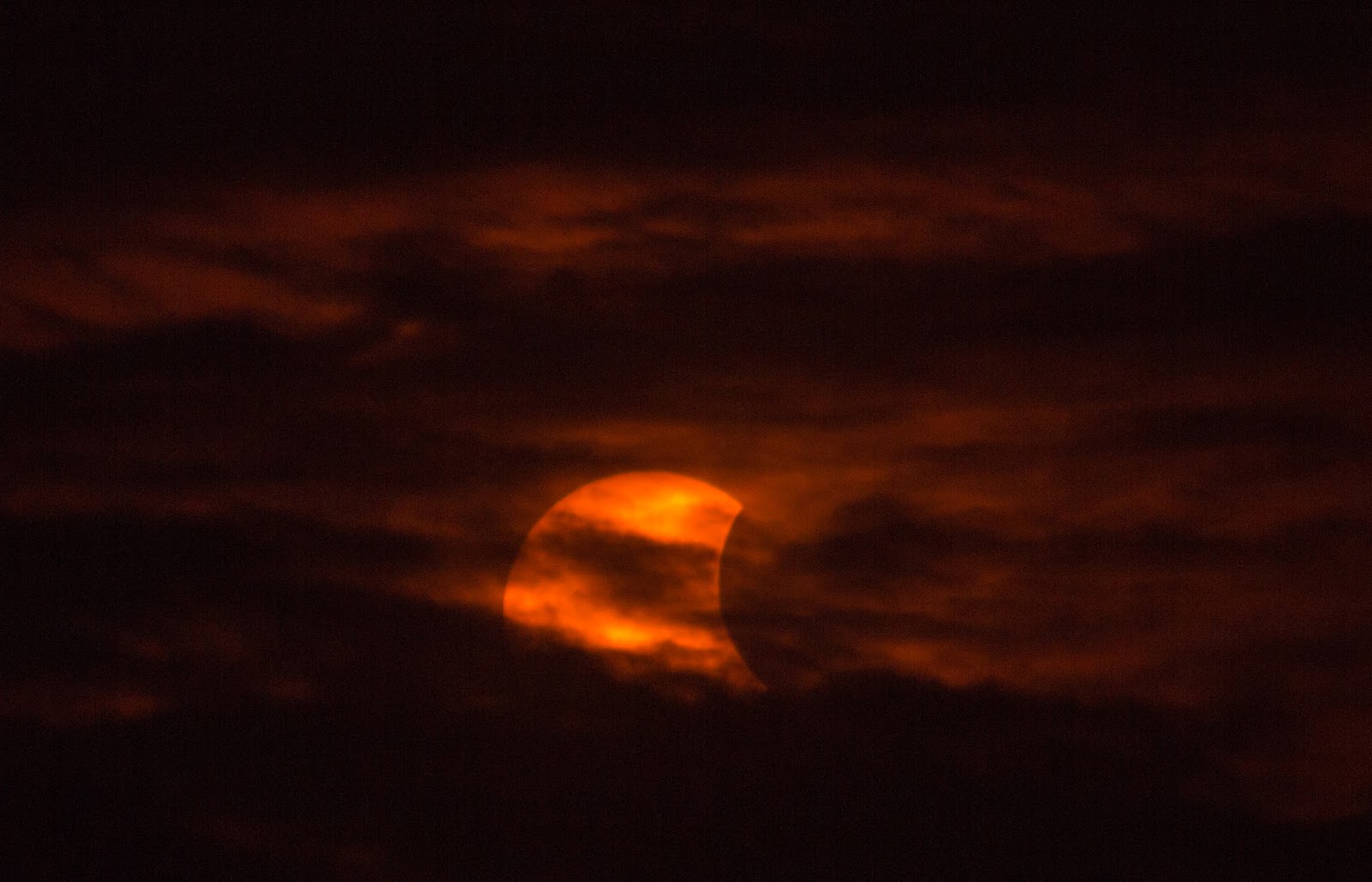
Partial solar eclipse, viewed from my office window with my home made solar filter. This was an exciting event and I feel like I showed some real persistence to get this image through the clouds a few minutes before going into an appointment at work. Just shows you can make time for it even if you're busy!
lunar eclipse composite
My first total lunar eclipse and my best photo probably so far, I'm super proud of this! I had to wake up super early on a work day, and spent hours stacking photos for each stage of the eclipse. It was an amazing event to see and to document, I'll cherish this photo for years to come. My parents had a huge poster of it framed and it's in my family room now.
iphone sunset
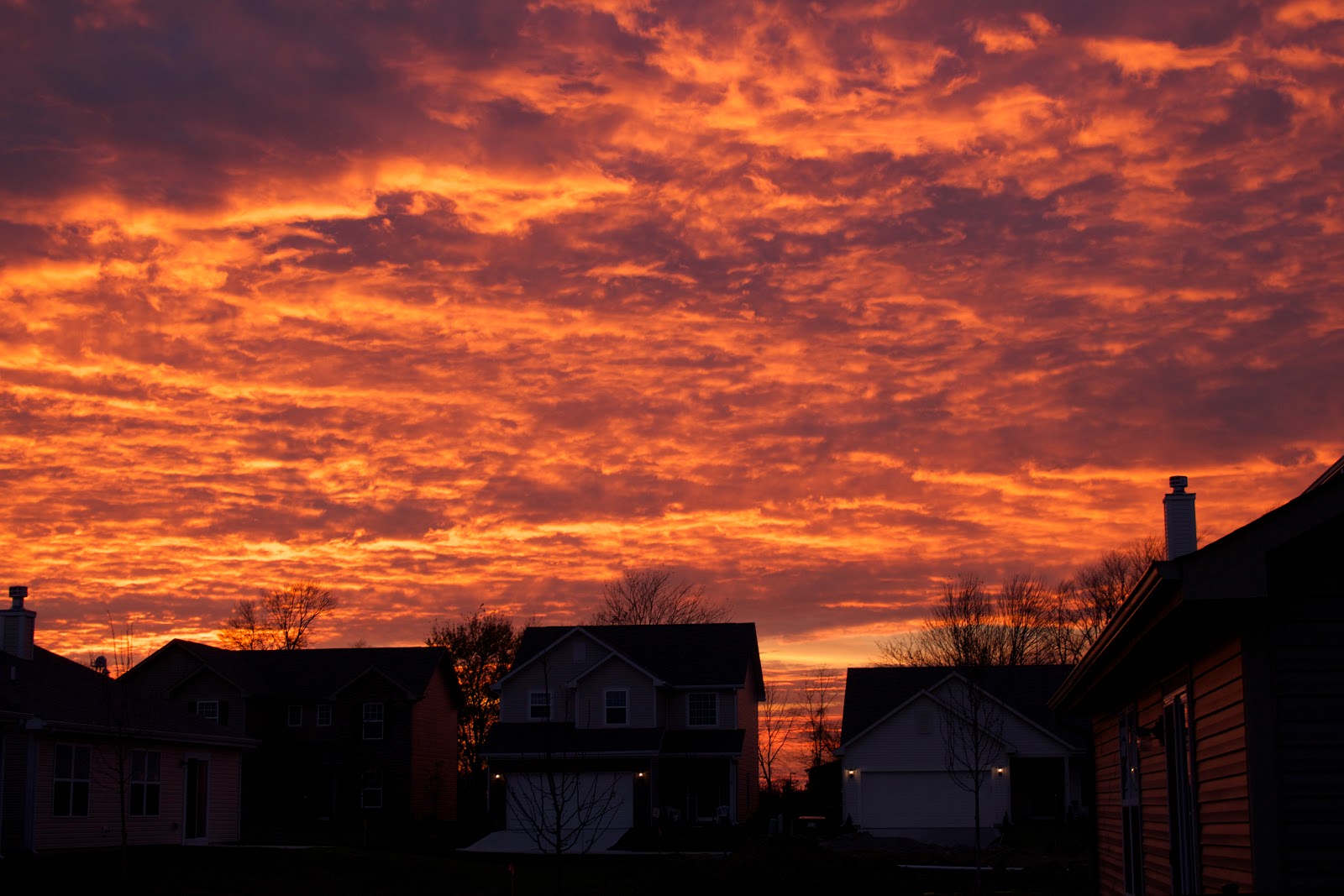
Amazing sunset and iPhone photo at that! Indiana is amazing for skywatching, I've never seen so many rainbows and cool sunsets. Forget 'big sky country' it's all about the crossroads of America when it comes to cool sky colors.
supermoon
Supermoon and one of many moon photos of my suburban skyline. It's nice to have a backyard and a view to the South, as well as a view down the corridor of backyards to see the moon rising over the rooftops.
trifid nebula and lagoon
Lagoon Nebula and Trifid Nebula with my EQ-1 motorized mount. This year I really upped my deep sky game with the mount, and I've only used it a few times. Still plenty of room for improvement!
milky way
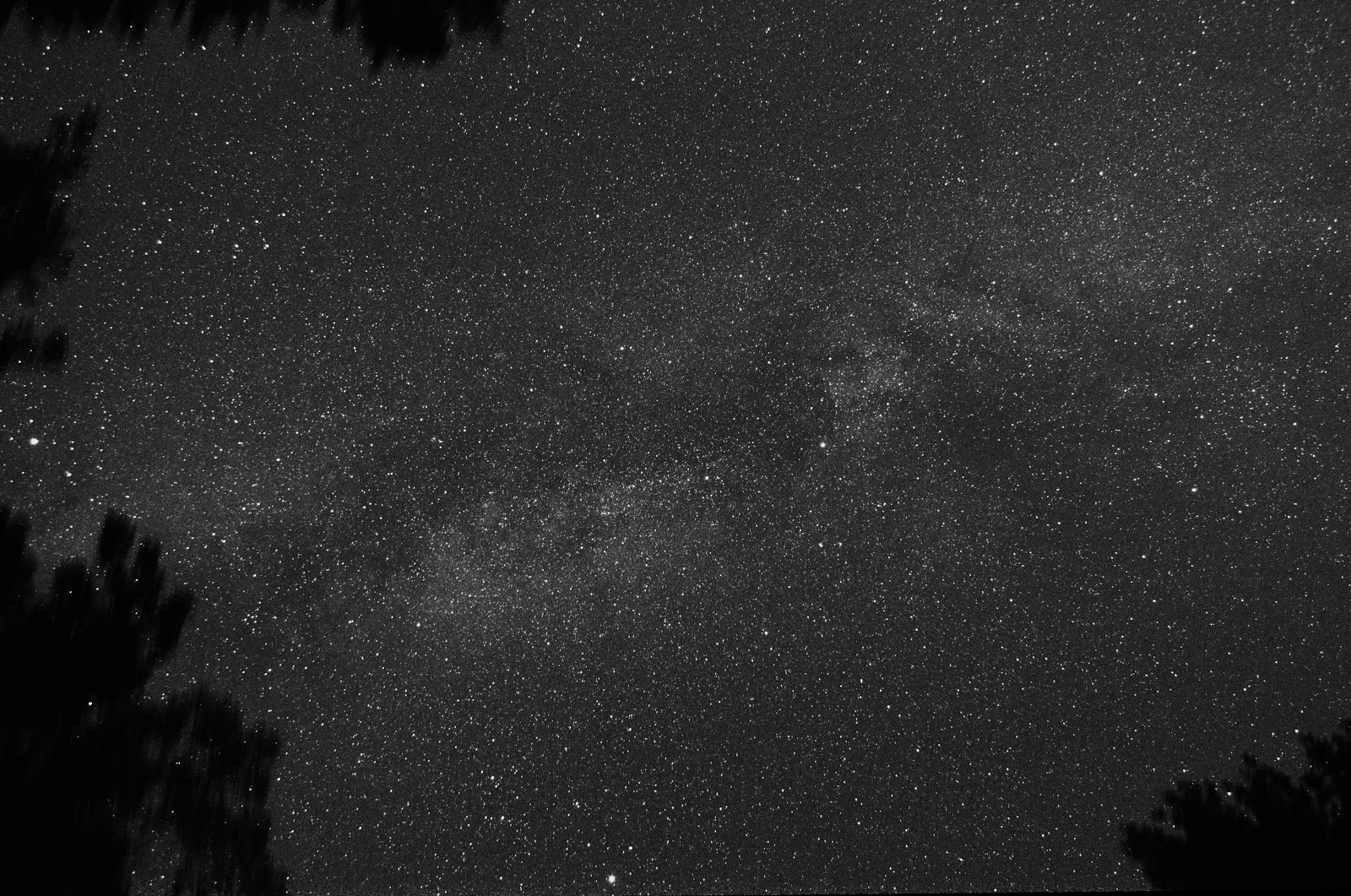
Probably my best Milky Way photo to date, I just wish I had my EQ mount for this one. I took it on a fixed tripod during a work retreat into the woods. It was the darkest sky I was under all year, and I got some good naked eye views of the Milky Way as well. Hoping to improve on this over the summer with some tracking and maybe even see some of the colors.
green fuzzy comet
New year comet, this one I got with just a fixed tripod. Pleased with the nice color with what seemed like minimal effort. It must be a sign that I'm getting better and more comfortable because this really seemed like a pretty casual acquisition.
earthshine moon
Interesting earthshine moon photo: This year I've been working on including more foreground objects to add interest. I've sort of gotten over the hump of being so new that I just try to get the right settings, and now I'm turning some attention to composition and the more artistic side of astrophotography.
public radio booth
That time I was on NPR Science Fridays, wow what a treat! This was out of the blue, one day I got a call about taking moon photos with an iPhone, and a couple days later I was live on the air. This is like my peak fame, my 15 minutes, I still can't believe it haha! Me, on NPR, wow!
neil tyson audience
Getting to see Neil deGrasse Tyson speak for free on the UIndy campus. Honestly, the excitement of the event was better than the talk. It was more a celebration of science than a science lecture. It was very pop culture and fun. Being part of this audience of 4000 was great, and my husband came with me - which is always nice when he supports my interests!
orion nebula
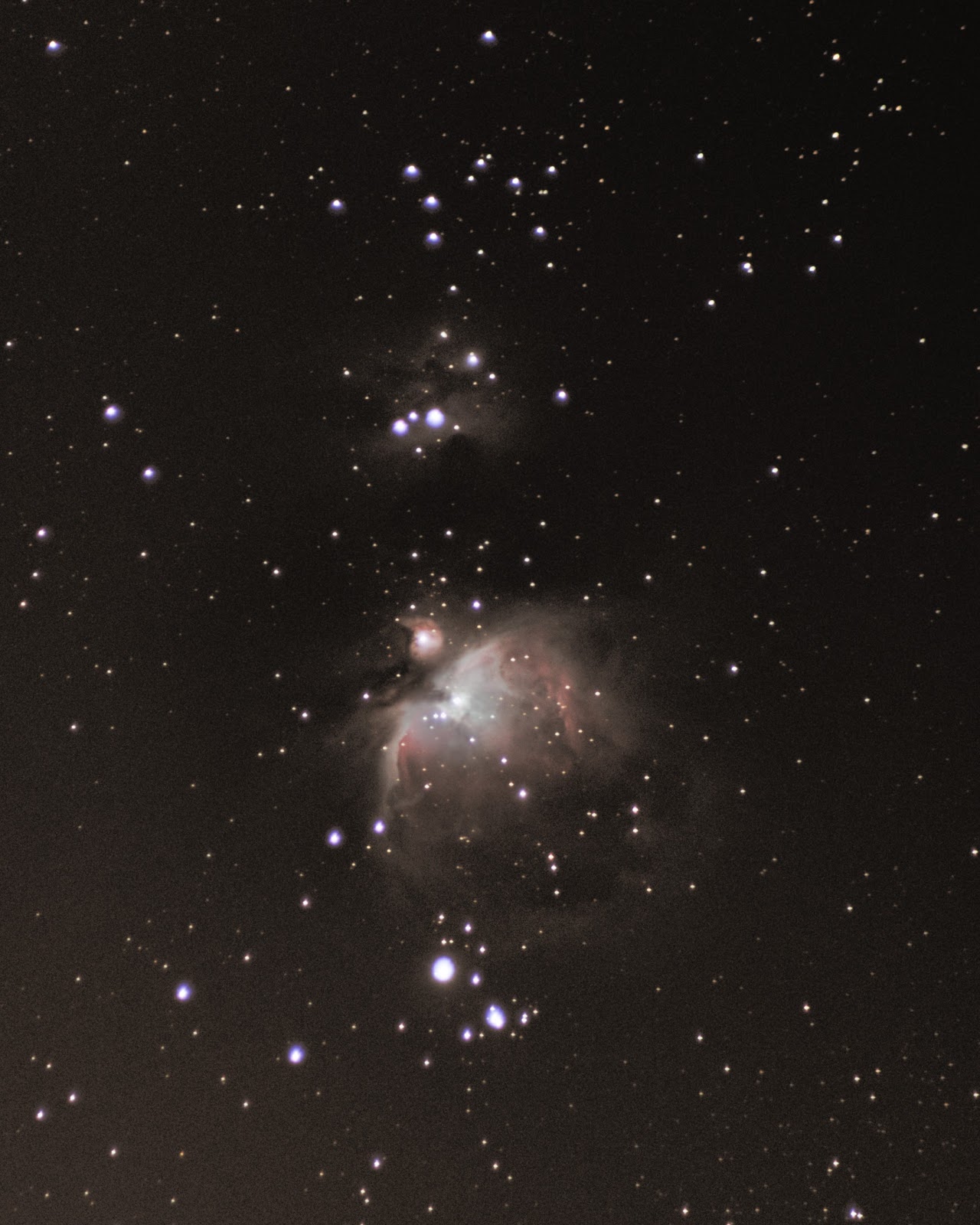
Too legit to quit Orion Nebula, this image is my pride and joy for the year. I feel like it's a huge milestone and a gateway into the realm of 'real' astrophotography. I take a lot of dumb little fuzzy blob photos, but this is legitimately a deep space image from my own backyard. I feel validated and like my improvement is undeniable, and it makes me excited to keep learning. I also have this image framed in my family room.

So there you have it, this was a fun walk down memory lane for the year! Here's hoping for a successful and productive new year, plenty of new territory and things to learn!