Sunday, December 1, 2013

Conjunction: Saturn, Moon, Mercury on December 1, 2013

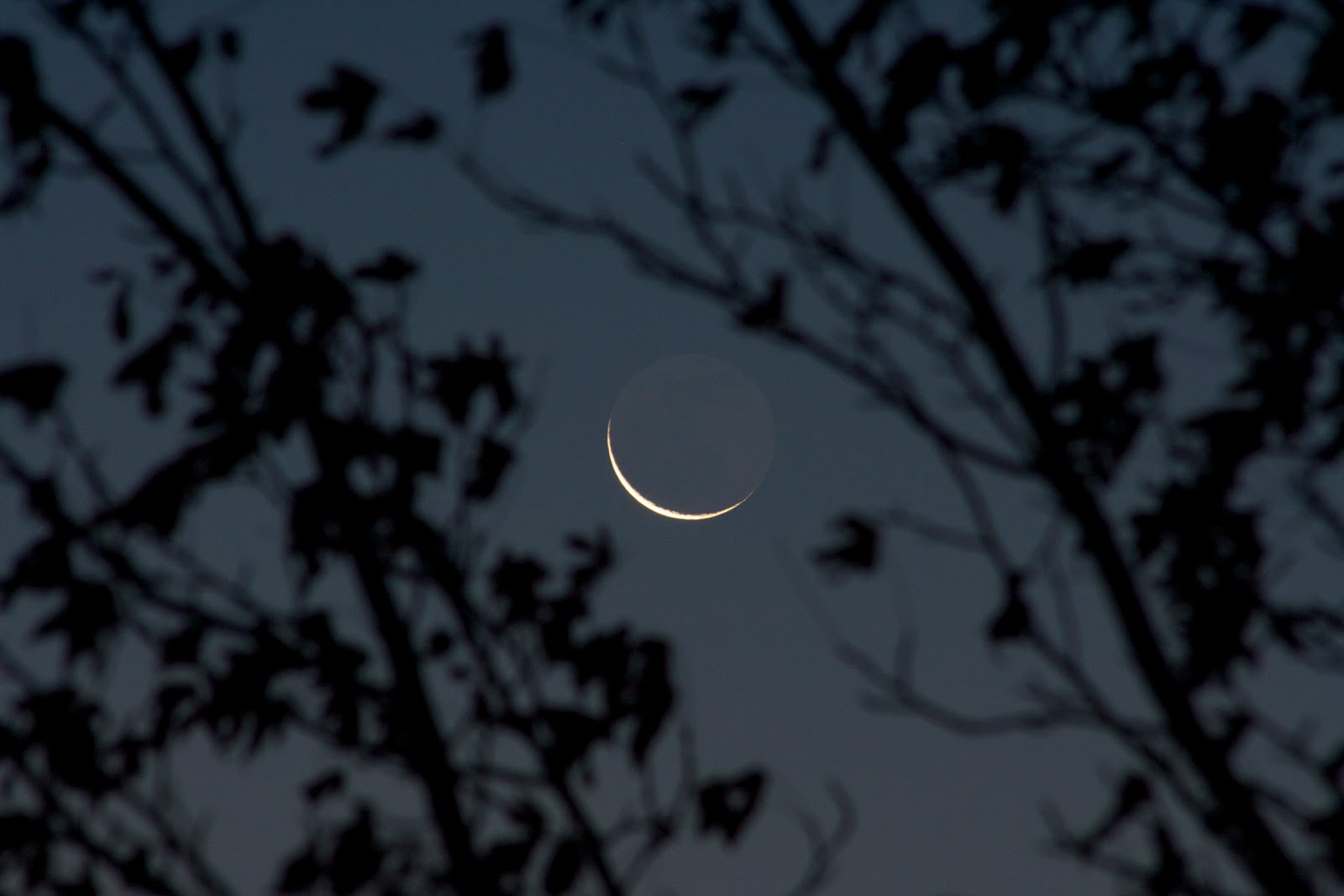
I have been planning to photograph this conjunction since November 2, and since the close conjunction of Saturn and Mercury was clouded out, I was super excited to have a clear morning to see the moon join the pair. I took a lot of photos to make sure I had something that would turn out, and I played a bit with depth of field looking at the moon through trees.

It was awesome seeing the thin 3% illuminated waning crescent moon, and I can't wait to see the waxing crescent out my balcony window in the evening in a few nights. Not too cold this morning either, here are my best shots with details...

1.3 sec, f/5.6, ISO 400, 130mm 12/1/2013 – 6:53 AM

2.5 sec, f/9, ISO 400, 75mm 12/1/2013 – 6:57 AM

1.3 sec, f/11, ISO 400, 300mm 12/1/2013 – 7:05 AM

5 sec, f/11, ISO 1600, 300mm 12/1/2013 – 6:42 AM (position of tower tweaked in Photoshop)

2 sec, f/9, ISO 800, 180mm 12/1/2013 – 6:49 AM


Tiny Things at Prime Focus: Albireo and Crescent Venus

albireo prime focus

I got some more experience at prime focus this past week, mounting my DSLR directly to the Meade 285 using the telescope as a huge lens. I was able to improve upon my best Albireo photo - previously I shot it using just the 300mm lens on the DSLR, which is able to resolve separation distances of about 28 arcseconds. At prime focus, the separation is much more apparent, and there is some black space in between which helps the color difference show up a little better.

crescent venus prime focus

I also turned my scope to Venus, and was able to identify its current crescent phase - however the chromatic aberration is quite apparent on this old refractor. Notice how the red and blue ends of the light spectrum don't quite line up - which means the lens is effectively acting like a prism when it is not supposed to.

Sunset Photos Experimenting with Depth of Field

sunset depth of field
Adjusting depth of field with f-stop alone

sunset depth of field
1/400 sec, f/11, ISO 200, 300mm

sunset depth of field
1/1000 sec, f/5.6, ISO 200, 300mm

sunset depth of field
1/1000 sec, f/5.6, ISO 200, 300mm

sunset depth of field
1/640 sec, f/5.6, ISO 200, 300mm

sunset depth of field
1/400 sec, f/5.6, ISO 200, 180mm

sunset depth of field
1/320 sec, f/11, ISO 200, 300mm

Balcony Star Trails featuring Meade 285

meade 285 with star trails
Stack of 39 images, each at f/2.7, ISO 800, 6.2mm, 15 sec, taken with Canon PowerShot

I staged this photo to include my Meade 285 telescope as the subject matter, facing West toward Lyra setting over the building next door. It was one of the first really cold nights this winter, and I forgot how the cold messes with the tape holding down the shutter on my point and shoot camera. The tape loosened up and the camera stopped clicking after only 39 frames.

Lyra Constellation with Star Labels, DSLR with 110mm Lens

lyra labels 110mm
3 min 7 sec exposure comprised of 75 subs, 40 darks, 40 bias, each at ISO 1600, f/5.6, 110mm, 2.5 sec
Before Lyra sets in the evening sky for the season, I wanted to get a good stack of the entire constellation. My result was the equivalent of a 3 minute exposure using 75 light frames at 2.5 seconds each (longer than the typical 1.3 sec because I wasn't zoomed in as far).

The faint Ring Nebula is visible as a blurry dot in the base of the harp, and double stars abound throughout the constellation.

Astrometry was helpful in wrapping my head around the raw image with its useful labeling tool. Here is the resulting image from the site.

lyra labels 110mm
Labels added using Astrometry