Showing posts with label novice1/2014. Show all posts

Sunday, February 2, 2014

Complete! IAS Novice/Urban Observing List for January 2014

There were plenty of popular goodies on the January observing list - a good incentive to go outside on the coldest nights. This month we had near record low temperatures down to the negative teens! Nevertheless, I was able to easily check some of these objects off my list.

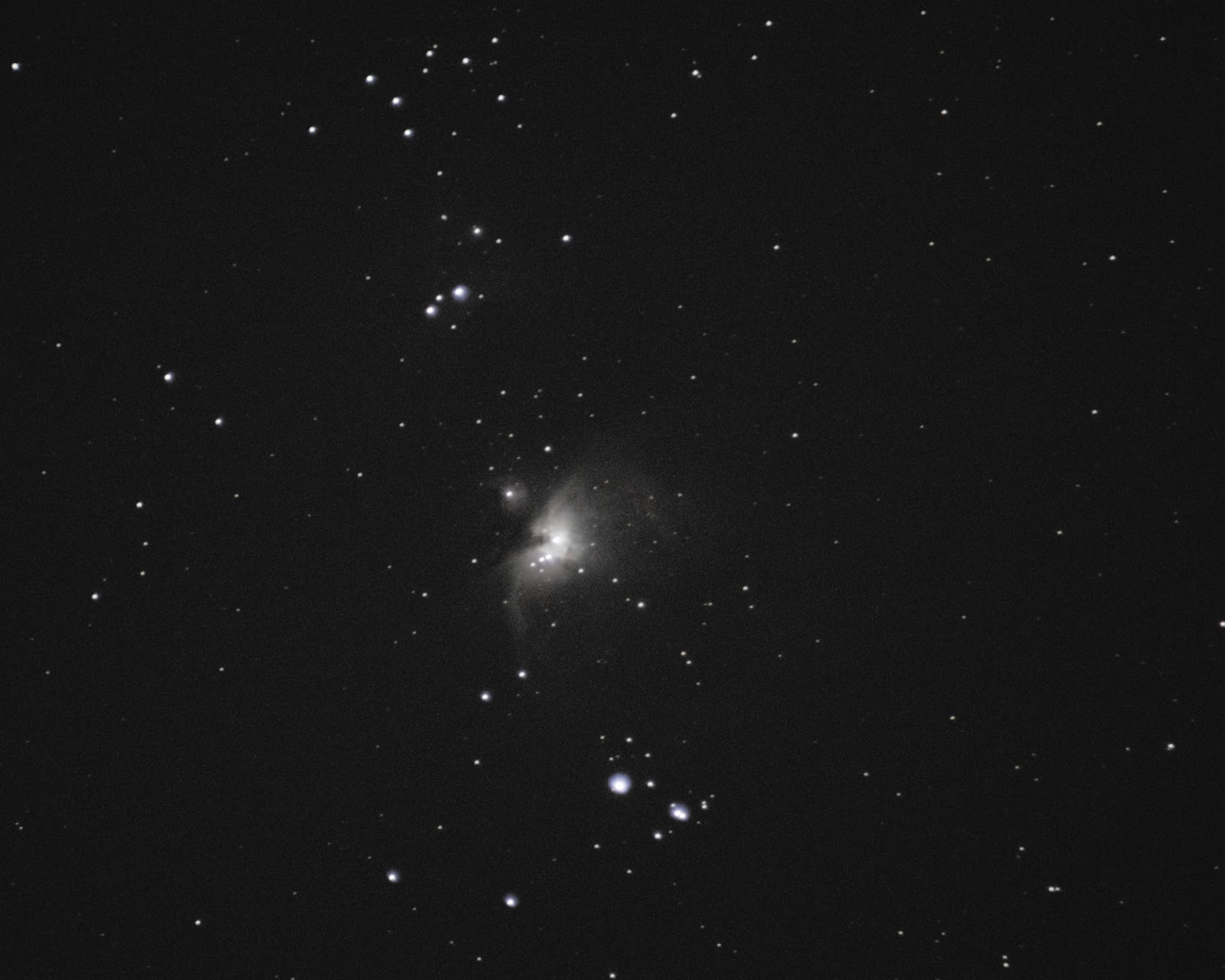
The Cheshire Cat was particularly fun, and I checked 4 objects off the list in Auriga. I did observe M42 during January, but I didn't get a very good photo of it, so I included my photo from December 30, 2013 to represent it on this post. M37 was encouraging because it looks like my new camera will pick up globular clusters quite well.

Finally, my new method of labeling lunar objects looks very clean and I'm happy with how they turned out. I also made some technical progress this month figuring out how to best photograph the moon with my T5i.




Wednesday, January 1, 2014

January 2014 Indiana Astronomical Society Novice/Urban Observing List

Phil Dimpelfeld from the Indiana Astronomical Society creates a Novice/Urban Observing List each month for newbies like myself with not-so-dark skies and not-so-powerful equipment. Last month I was able to observe 6 objects on the December list, including one of the challenge objects, M77. I also observed Polaris but was unable to resolve a separation between the double stars.

Thanks to my new T5i and motorized Orion EQ-1 mount I should have a fun time with the January list. I'm particularly excited about M42 as that was going to be one of my first targets with the new gear anyway! My mount is all set up, now I'm just waiting on the weather (like usual). I'm also hoping to bust out my new Barlow lens to get a close up view of the Trapezium.

Mel 25, “the Hyades” (Caldwell 41), open cluster in Taurus, 04h 27m, +15° 52’, mag = 0.5, size = 330’

1 Camelopardalis, double star in Camelopardalis, 04h 32.0m, +53° 55', mag = 5.7, 6.8, sep = 10.3"

The “Cheshire Cat”, asterism in Auriga, 05h 27m, +35° 00', mag = 5 to 7, size = 2°. Once you have found The Cat, finding the three Messier open clusters in Auriga (M36, M37, & M38) is a lot easier!

M38, open cluster in Auriga, 05h 28.7m, +35° 50', mag = 6.4, size = 21.0'

M36, open cluster in Auriga, 05h 36.1m, +34° 05', mag = 6.0, size = 12.0'

Theta 1 Orionis (the “Trapezium”) multiple star system in the Orion nebula, 05h 35.3m, -05° 23', mag = 6.7, 7.9, 5.1, 6.7, sep = 8.8", 13", 21.5". Larger apertures and good seeing will reveal more than 4 stars!

M42, the “Orion Nebula”, 05h 35.4m, -05° 27', mag = 3.7, size = 90' x 60'.

M37, open cluster in Auriga, 05h 52.4m, +32° 33', mag = 5.6, size = 23.0'

Mare Fecunditatis, first quarter Moon

Mare Nubium, last quarter Moon

Challenge Object #1:
Beta Orionis (“Rigel”), double star in Orion, 05h 14.5m, -08° 12', mag = 0.1, 6.8, sep = 9.5". Give your scope plenty of time to acclimate to the outside temperature before looking for this one!

Challenge Object #2:
M79, globular cluster in Lepus, 5h 46.8m, -24° 33’ mag = 8.5, size = 8.7’