Showing posts with label labels. Show all posts

Saturday, November 19, 2016

Reader Question About Moon Phase

I'm trying not to let the term 'reader question' inflate my ego, but I did receive a Facebook message from the Philippines from someone who tracked me down from my blog to ask me a very specific question about the moon phase during a certain position. She drew diagrams on a napkin and sent them from the other side of the world, neat!

reader moon question

The question was: "I've been looking at the moon lately and I'm trying to solve something really important. I hope that you can help me... If the moon is waning or waxing [gibbous] in the morning, which phase has the top part left out?"

So which phase has the top part missing in the early morning as shown in her diagram? This question is sort of backwards because it's all about identifying the name (waxing or waning gibbous) rather than the position.

reader moon question

I don't have Stellarim on my computer at work (I decided to answer this on my lunch break) so I looked through my Star Walk app, and she also sent local times for moonrise and moonset. Here is what I came up with at the time, and then I'll expand using Stellarium to show a more accurate scene of what she was looking for...

hand drawn moon phase diagram for gibbous
My quick diagram to work out which moon phase she was referring to, and it's most likely waxing gibbous setting in the west in the early morning. 
In short, a gibbous moon would only look like the drawing the reader provided at 2 times during the month. With the top part in shadow and the light part of the gibbous closer to the ground, it could only happen with the moon either rising or setting. Directly overhead the moon would appear to be facing sideways with the shadow part 'pointing' to the left or the right.

The moon looks exactly like her drawing when a waxing gibbous is setting and when a waning gibbous is rising.

As the moon rises and sets, the side of the moon that is the first to rise is also the first to set - in other words the 'leading edge' of the moon is first above the horizon and first below it, so the moon appears to turn in the sky, but is fixed relative to the arched pathway. If you think of a crescent moon, it will appear as a smiley face and a frowny face over the course of the same night.

Okay, so now all I had to do was figure out if she was looking at the moon rising or setting. Without knowing her cardinal directions, she did refer to 'early morning' and send along some local times. It couldn't be the waning gibbous because it only looks that way as it's rising after 9pm at night, so it must be the waxing gibbous setting in the early morning at 2:30am.

Clear as mud? Let's go to Stellarium to see if there's a simpler way to look this up. I updated my location in Stellarium to the Philippines and sure enough, the moon looks exactly like her drawing in the early morning as the waxing gibbous sets.

moon phase question in stellarium
Waxing gibbous moon setting to the west in Stellarium

Sunday, May 22, 2016

Milky Way Barely Visible in Noblesville

We had exceptional clear skies in Noblesville, IN on May 16 at 4am. I woke up to let the dogs out and it was like 40 degrees (F) with absolutely no wind. Perfectly clear skies. I saw Saturn and Mars blazing in the tail of Scorpius, and my favorite asterism the celestial teapot in Sagittarius.

I tried for a couple Milky Way shots and was surprised I actually could see some nebulosity even from my backyard. Noblesville is NE from downtown Indianapolis, so the light dome from the city is obvious - so seeing ANY part of the Milky Way is pretty cool.

backyard milky way before and after
Before (R) and After (L) processing in Adobe Camera RAW - not a lot to work with, but the fact that I caught it from my own backyard is pretty cool.

backyard milky way with light pollution
Single frame, Canon T5i, ISO 800, 18mm, f/3.5, 13 seconds on fixed tripod

backyard milky way with light pollution
Single frame, Canon T5i, ISO 1600, 18mm, f/3.5, 10 seconds on fixed tripod

backyard milky way with light pollution
Single frame, Canon T5i, ISO 1600, 18mm, f/3.5, 10 seconds on fixed tripod
As you can see, I didn't have much to work with - as soon as I turn the exposure and highlights up, the light pollution washes out the Milky Way. Still a cool piece of sky, and definitely reminds me of summer. Here is a screenshot from Stellarium showing the position of Saturn, Mars, and the stars in the constellations Scorpius and Sagittarius.

stellarium screenshot tea pot
Screenshot from Stellarium showing the southern sky at the time I took the photos on May 16, 2016. 
teapot asterism
Single frame, Canon T5i, ISO 800, 34mm, f/4.5, 6 sec - the Teapot Asterism and M7 globular cluster visible over the rooftops in the southern sky.

Saturday, February 14, 2015

Crescent Moon Rising with Saturn and Scorpio

I was up letting the dog out at 3am the other night and saw an orange crescent moon rising over the neighbor's house. Next to it, I saw two brighter stars - but when I went to take a picture of the scene I thought I was getting some crazy double lens flare or something. What were these two extra stars below it? I seriously thought it was some kind of lens anomaly.

crescent moon with scorpio
Single frame, Canon T5i, f/6.3, 2 sec, ISO 1600, 110mm

saturn in scorpio

saturn in scorpio


Then I hopped on Stellarium and saw that this group of stars was actually Saturn in the head of Scorpio. Like a little sideways big dipper with Saturn, β1 Sco (Acrab), ν Sco, ω1 Sco, ω2 Sco, and δ Sco (Dschubba).

saturn moon scorpio with labels

Wednesday, December 31, 2014

Comet Lovejoy C/2014 Q2 in Lepus

Comet Lovejoy C/2014 Q2 is currently in the constellation Lepus, and the celestial rabbit's bunny ears made excellent pointer stars to help locate the comet last night! The comet was visible with binoculars and with my DSLR even through thin clouds. Tonight is supposed to be crystal clear, so I might make another attempt to photograph it since I don't really have any NYE plans.

comet lovejoy c/2014 q2 75mm DSLR
Brightness, contrast, and saturation adjusted in Photoshop

comet lovejoy c/2014 q2 75mm DSLR
Original image, single frame with Canon T5i, ISO 3200, 75mm, f/4, 6 sec

Monday, September 22, 2014

Jupiter and the Two Dogs, Canis Major and Minor

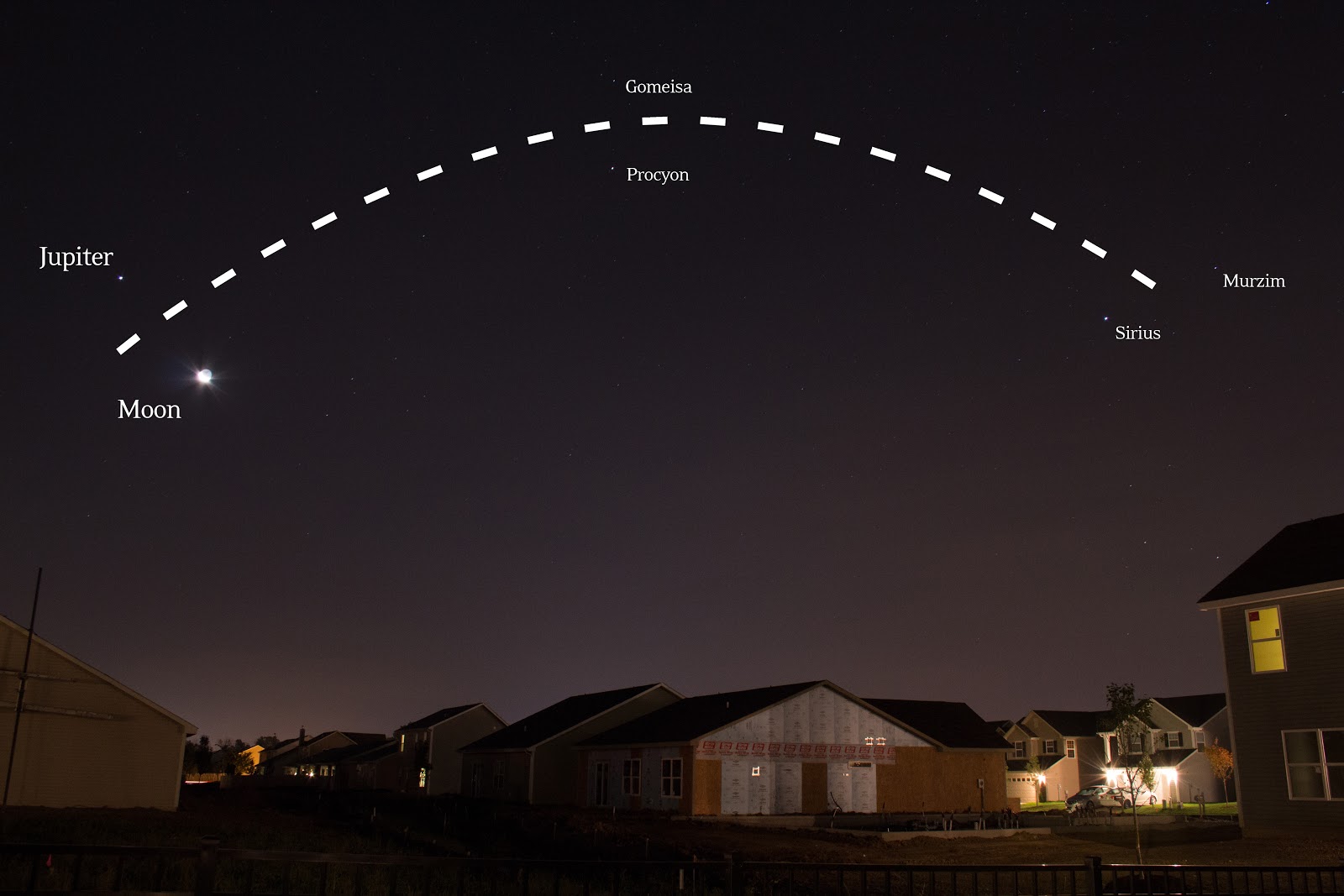
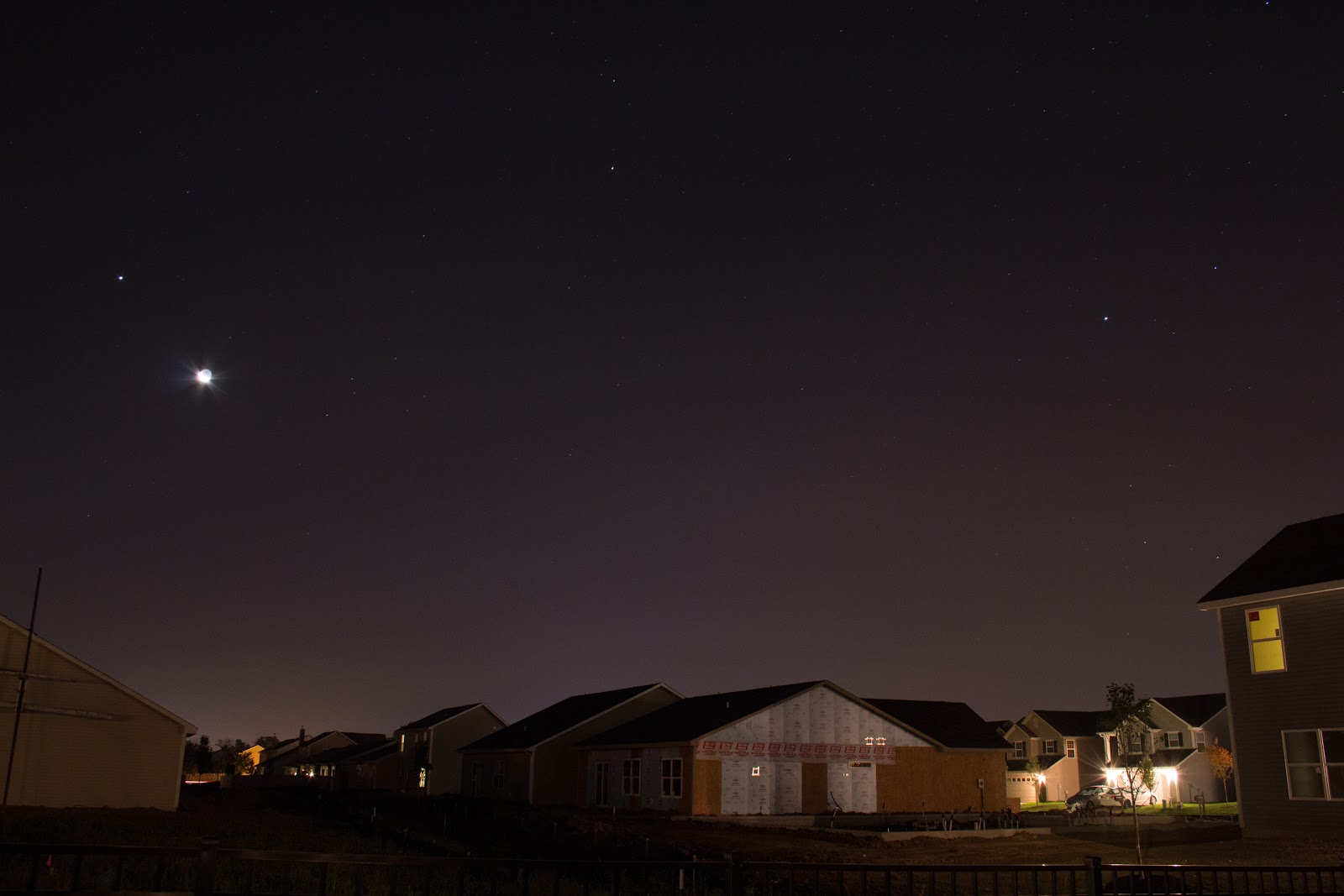
I was outside before sunrise and saw Jupiter and the crescent moon forming an arc in the sky with the bright stars in Canis Major and Canis Minor. Jupiter and two dogs, it was a rather symmetrical arrangement. It was in the approximate location of a huge rainbow I saw earlier this summer.

jupiter moon canis major minor
Early morning September 20, 2014

jupiter moon canis major minor
Single frame with Canon T5i, fluorescent WB, f/7.1, 15 sec, ISO 800, 18mm

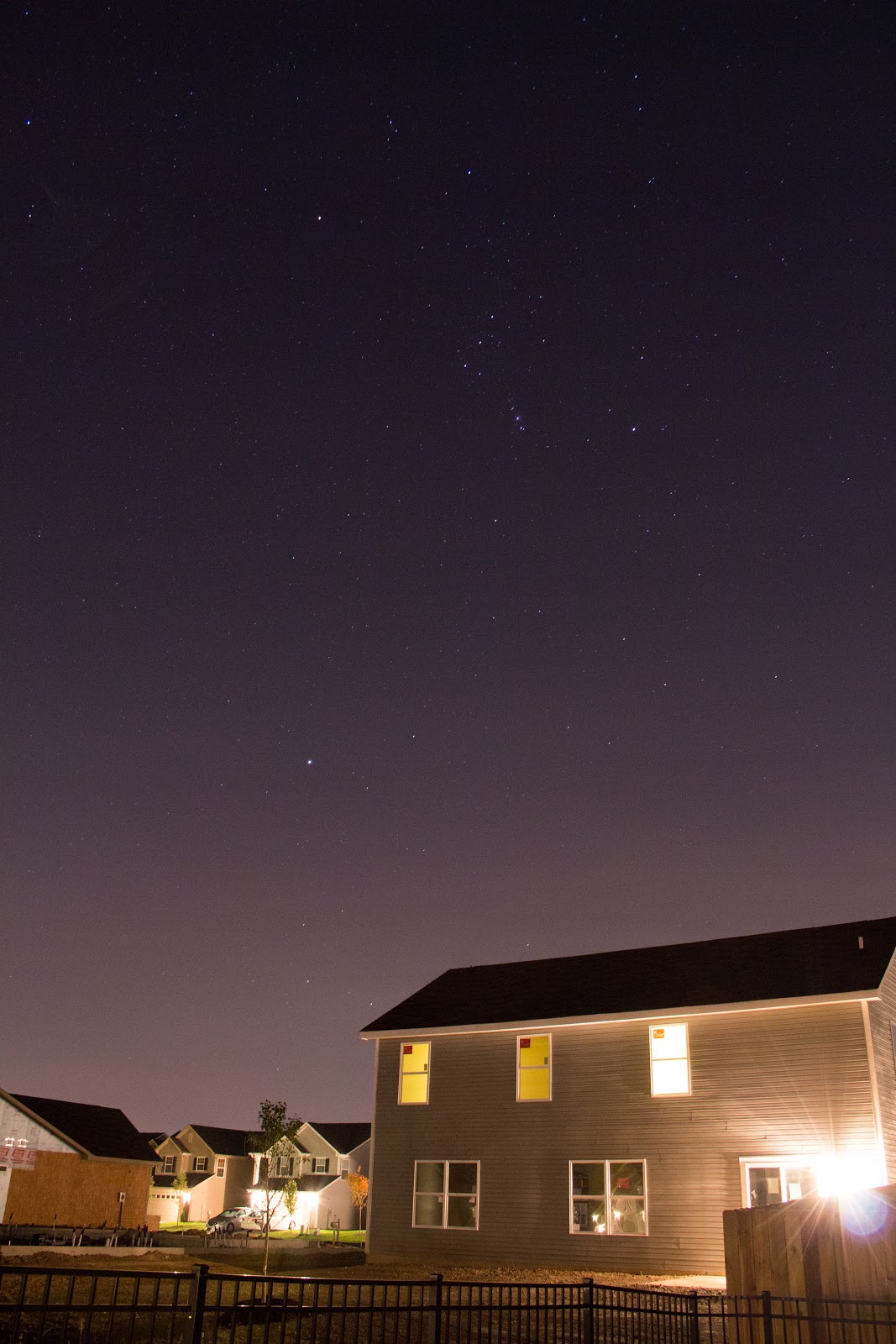
winter sky preview
Jupiter, Moon, and preview of the winter sky just before sunrise. Single frame with Canon T5i, fluorescent WB, f/5.6, 13 sec, ISO 800, 18mm

orion constellation over house
Orion over my neighbor's house, Single frame with Canon T5i, fluorescent WB, f/5.6, 13 sec, ISO 800, 18mm

orion and other stars in the night sky
Another winter sky preview - I'm excited for this awesome patch of sky to be over my backyard all winter!

Tuesday, September 16, 2014

Bradford Woods Views of the Milky Way with Canon T5i

This weekend I was co-hosting a Peer Educator retreat for our health and wellness peer educators at Bradford Woods in Martinsville, IN. Bradford Woods is close to the Link Observatory, and I knew it would have better skies than my house in Noblesville, so I brought my camera along.

We had a campfire at night and I could see through the trees that the stars were crystal clear and that it was going to be a great night for stargazing.

When I put the fire out and stepped out into a clearing, I could immediately see the faint veil of the Milky Way. You know it's a great sky when you don't even recognize constellations because there are too many stars!

milky way in summer triangle over bradford woods
Canon T5i on fixed tripod, stack of 29 light frames at ISO 6400, f/4.5, 18mm, 10 sec
Total exposure time 4 min 8 sec

cygnus milky way label
Same image as above with the Summer Triangle and Cygnus
The clearing I was standing in was amazing, it blocked out all of the parking lot lights, and all of the lights from the cabins in the park were blocked by the tall trees. One drawback to the trees, however, is that I had no view of the horizon - and missed out on the brightest areas of the Milky Way. The region within the Summer Triangle is nice, and recognizable, but not the brightest bit by far.

andromeda 18mm
Canon T5i on fixed tripod, stack of 95 light frames at ISO 3200, f/4.5, 18mm, 10 sec
Total exposure time 14 min 41 sec
Facing the other direction, and at ISO 3200, I didn't get much nebulosity in the Milky Way, but I did catch our neighbor galaxy Andromeda - which at 18mm looks like a large blurry star.

stars and black tree silhouettes
Cassiopeia and Andromeda rising over the treetops
Canon T5i on fixed tripod, single frame ISO 3200, 18mm, f/4.5, 10 sec

I'll end by saying it's a good sign when the trees in the foreground are actually black at night. I'm so used to seeing houses and orange trees in the neighborhood. Even at ISO 3200, these trees make true silhouettes against the night sky. Very cool!

Monday, May 19, 2014

Stars in the Arch of Spring

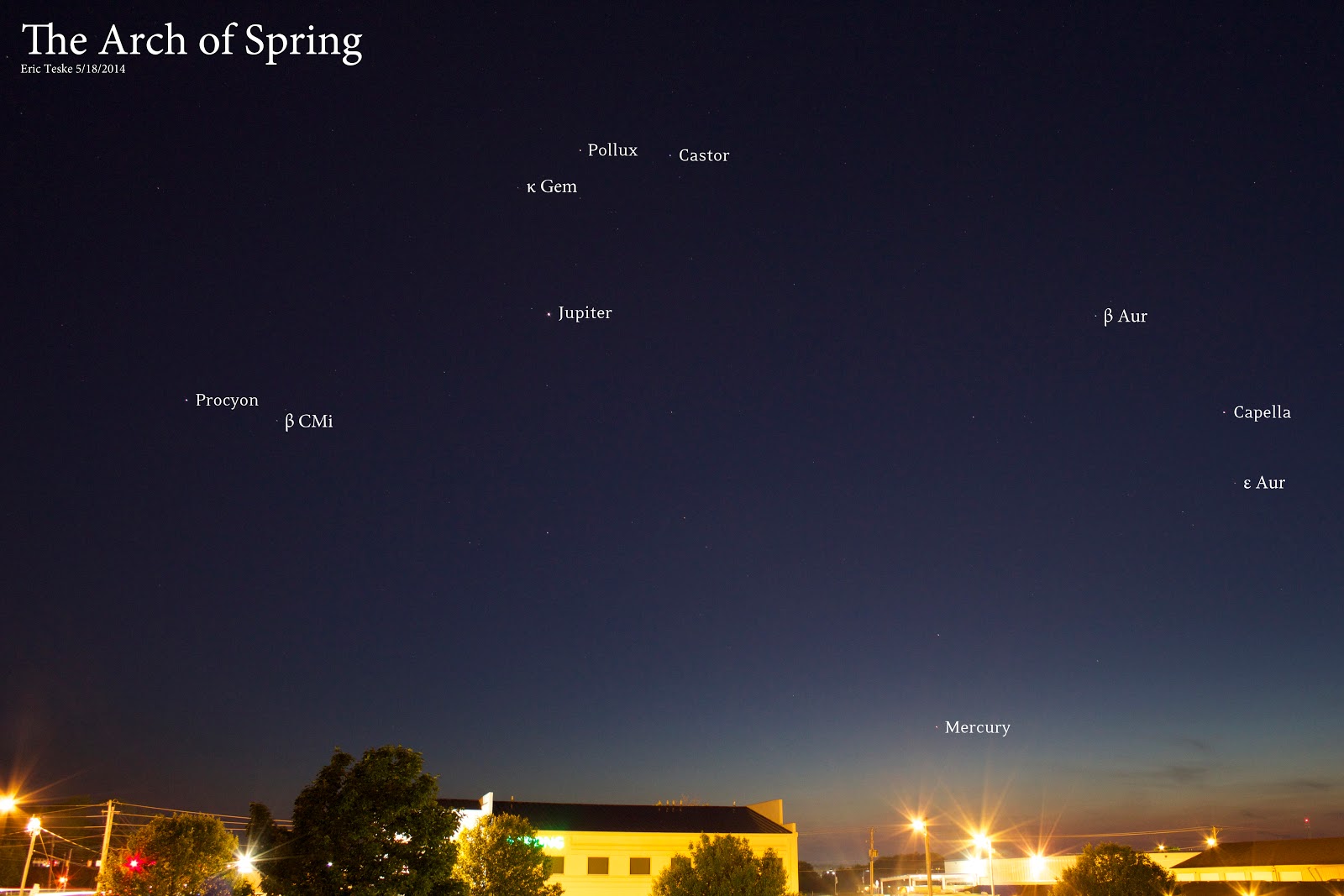
I read about the Arch of Spring, or the Spring Arc, in this week's sky at a glance from Sky & Telescope - but I couldn't find a photo or other description anywhere online. The blurb says that "the western twilight Arch of Spring is sinking..." and names Castor and Pollux as the top of the arch, with Procyon to the left and Menkalinen (β Aur) and Capella to the right. Since I couldn't find a photo anywhere online I made my own tonight!

Basically, the Arch of Spring is simply half the Winter Hexagon. Not all that surprising, but a noteworthy landmark in the western sky this time of year.

stars in the arch of spring
Canon T5i, ISO 800, 18mm, f/7.1, 10 sec

I also caught sight of Mercury before it dipped below the western horizon. We've had so much rain lately, I wasn't even aware that it was setting in the west until now, and I believe it's already on it's steady crawl back toward the sun.

jupiter and mercury
Canon T5i, ISO 200, 24mm, f/11, 8 sec

Coma Star Cluster (Melotte 111) in Coma Berenices

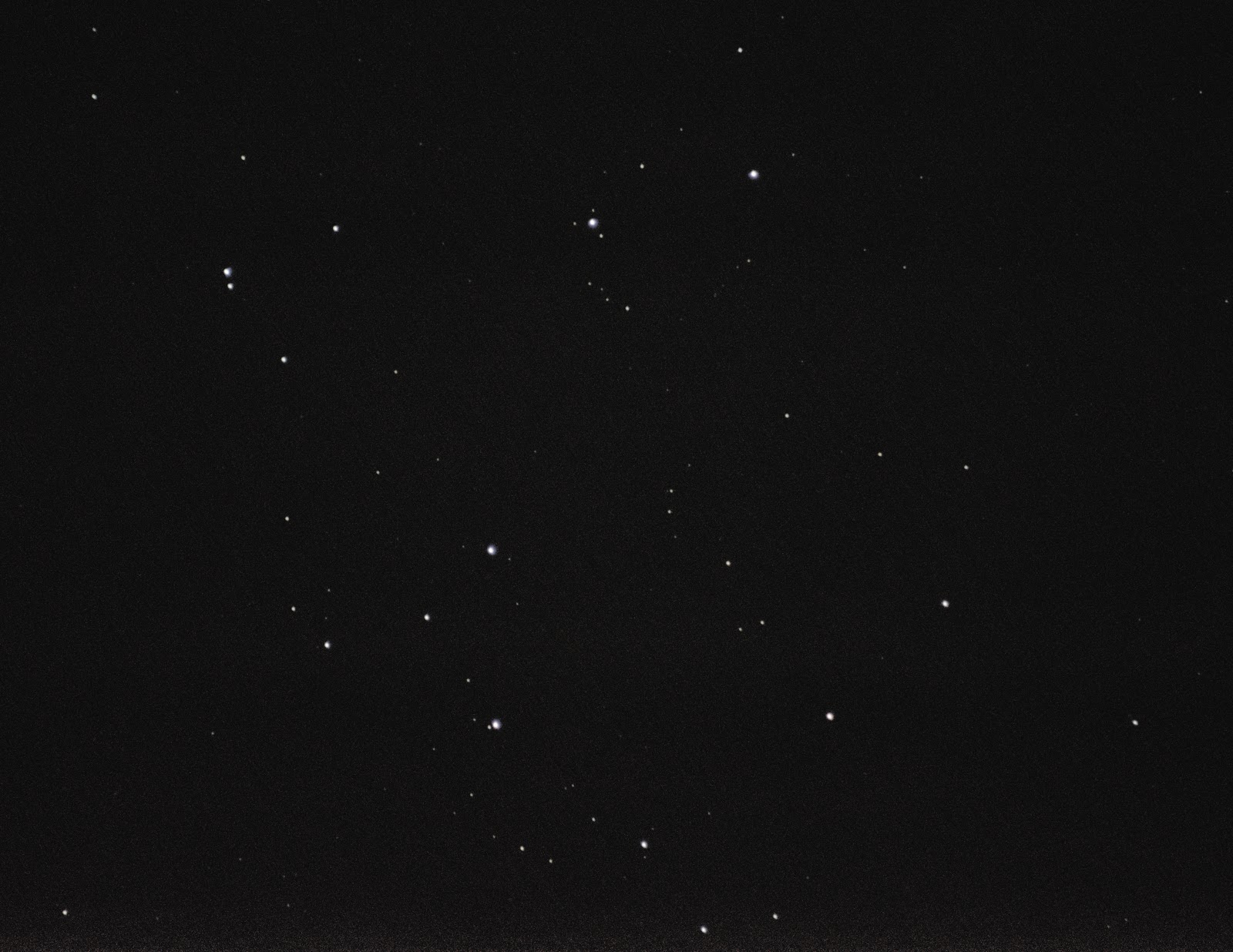
I'm familiar with Coma Berenices from last summer, but I was excited to get to know it a little better with a few objects on the May 2014 observing list. The Coma Star Cluster, or Mel 111 from the Melotte catalogue, is an open cluster of stars that sort of reminds me of the Hyades because of it's vague heart or V shape. This is a very busy piece of sky, but most of the stars are not visible to the naked eye from my location in central Indiana.

Coma Star Cluster
Coma Star Cluster, stack of 21 subs each at ISO 3200, 300mm, f/5.6, 1 sec with Canon T5i on fixed tripod

Coma Star Cluster in Coma Berenices
Coma Star Cluster (Mel 111) with labels

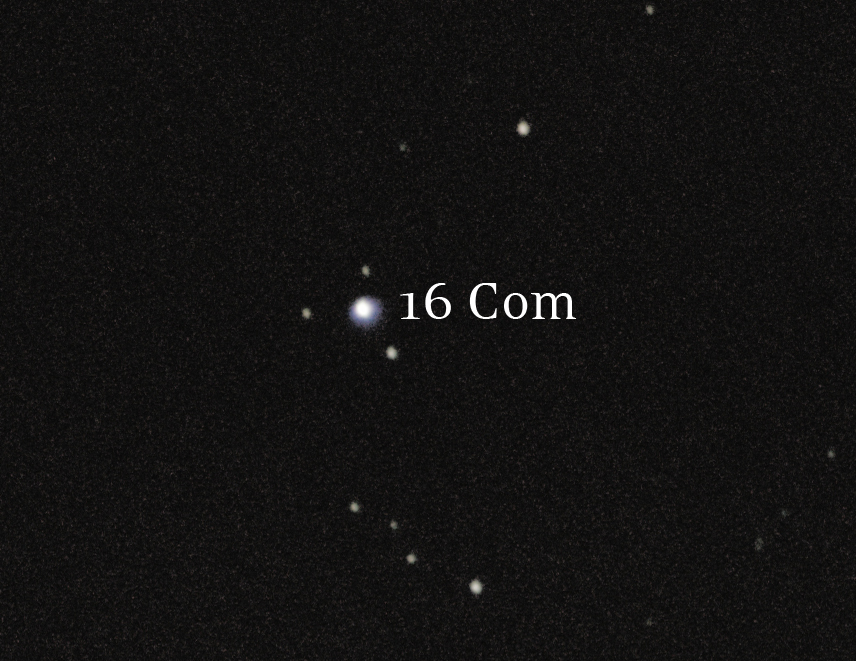
16 Comae Berenices (16 Com)
Crop from above photo, 16 Comae Berenices (16 Com) looks especially cool with its 3 faint neighbors

Tuesday, May 13, 2014

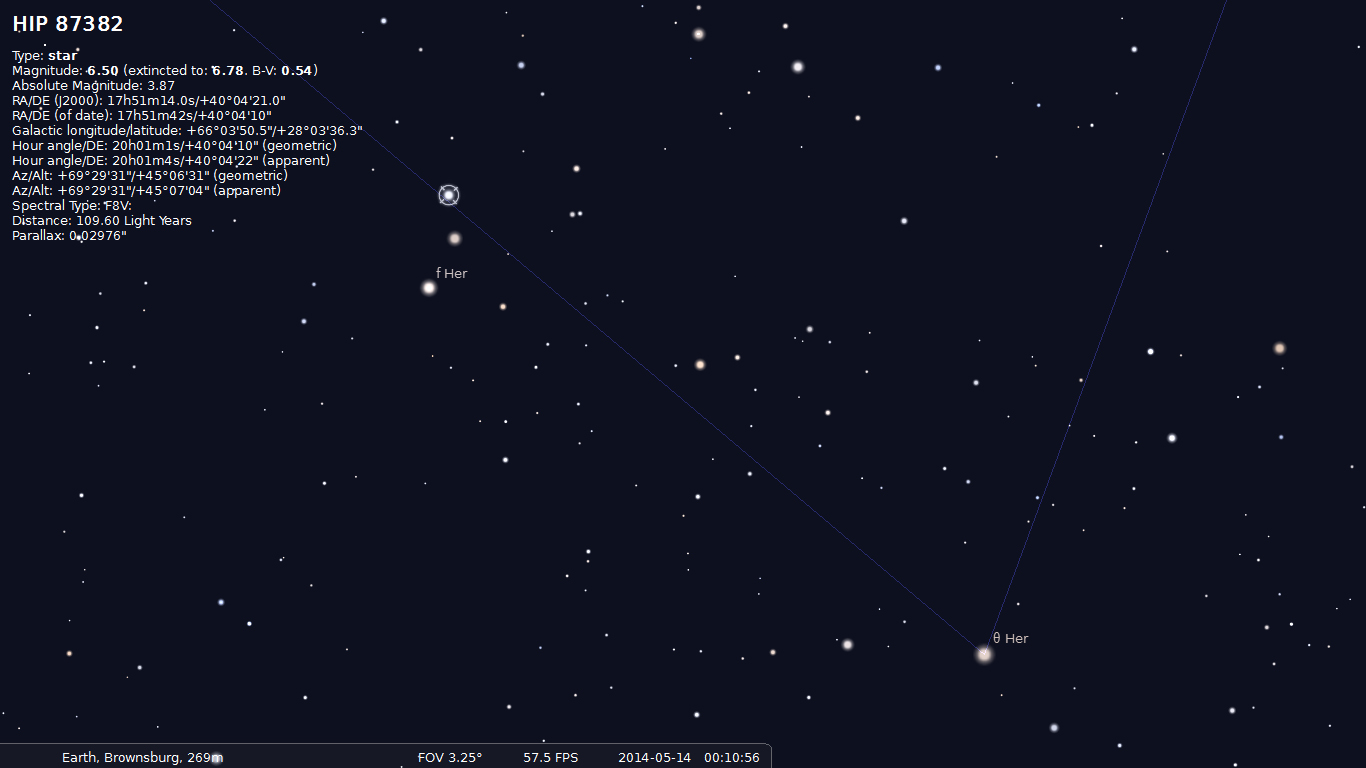
How to Locate HD 162826 "Sun Sibling" in Hercules

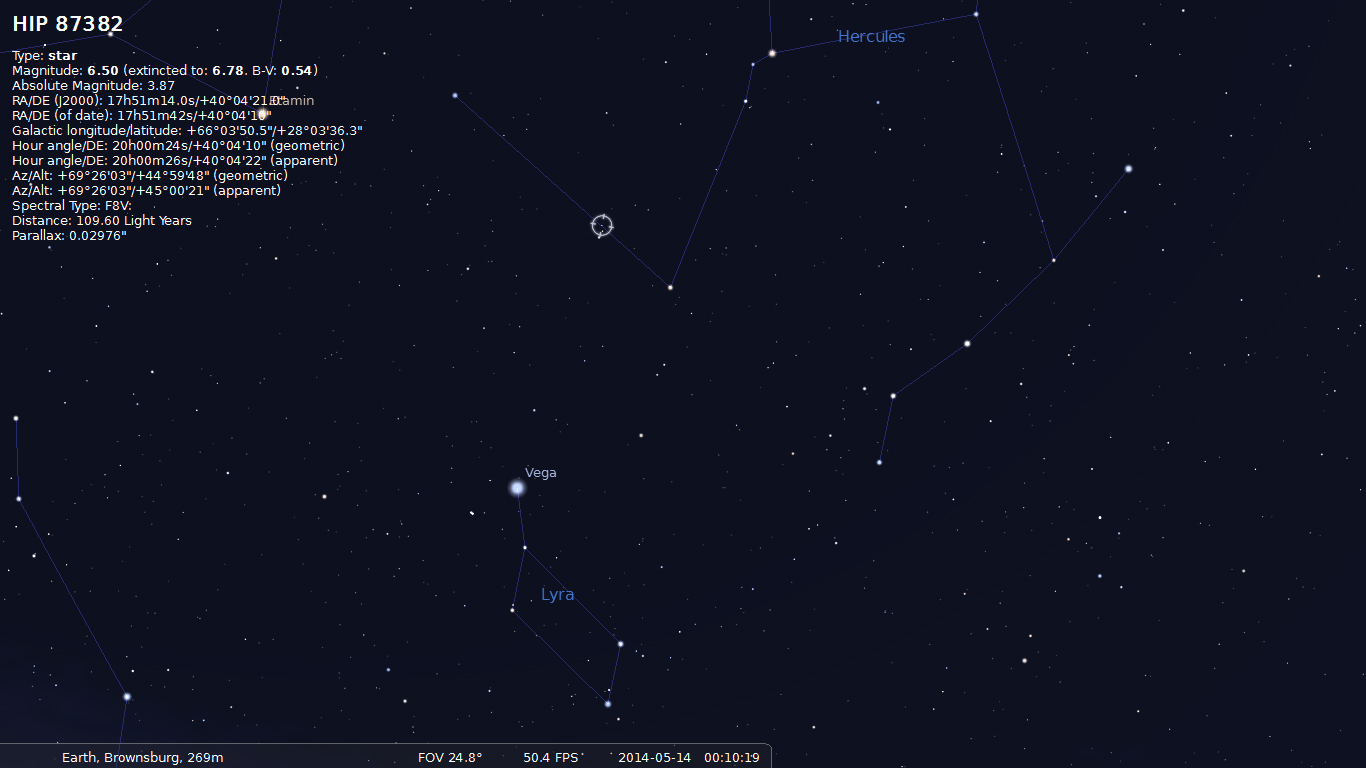
You might have seen recent news items about the Sun's sibling star or "sister star" identified as HD 162826 in the constellation Hercules. If you try to locate this star in Stellarium or other star charts, it might not immediately appear because this star goes by many other names.

According to Wikipedia, other designations include 2MASS J17511402+4004208 , GSC 03093-01946 , TYC 3093-1946-1, BD+40 3225 , HD 162826 , HIP 87382 , HR 6669 , SAO 47009.

In Stellarium, the star is labeled HIP 87382 from the Hipparcos Catalogue.

Locate HD 162826 sub sibling
Location of HD 162826, aka HIP 87382, relative to Vega (Screenshot: Stellarium)
find HD 162826 sub sibling
Location of HD 162826 in Hercules (Screenshot: Stellarium)

Saturday, April 26, 2014

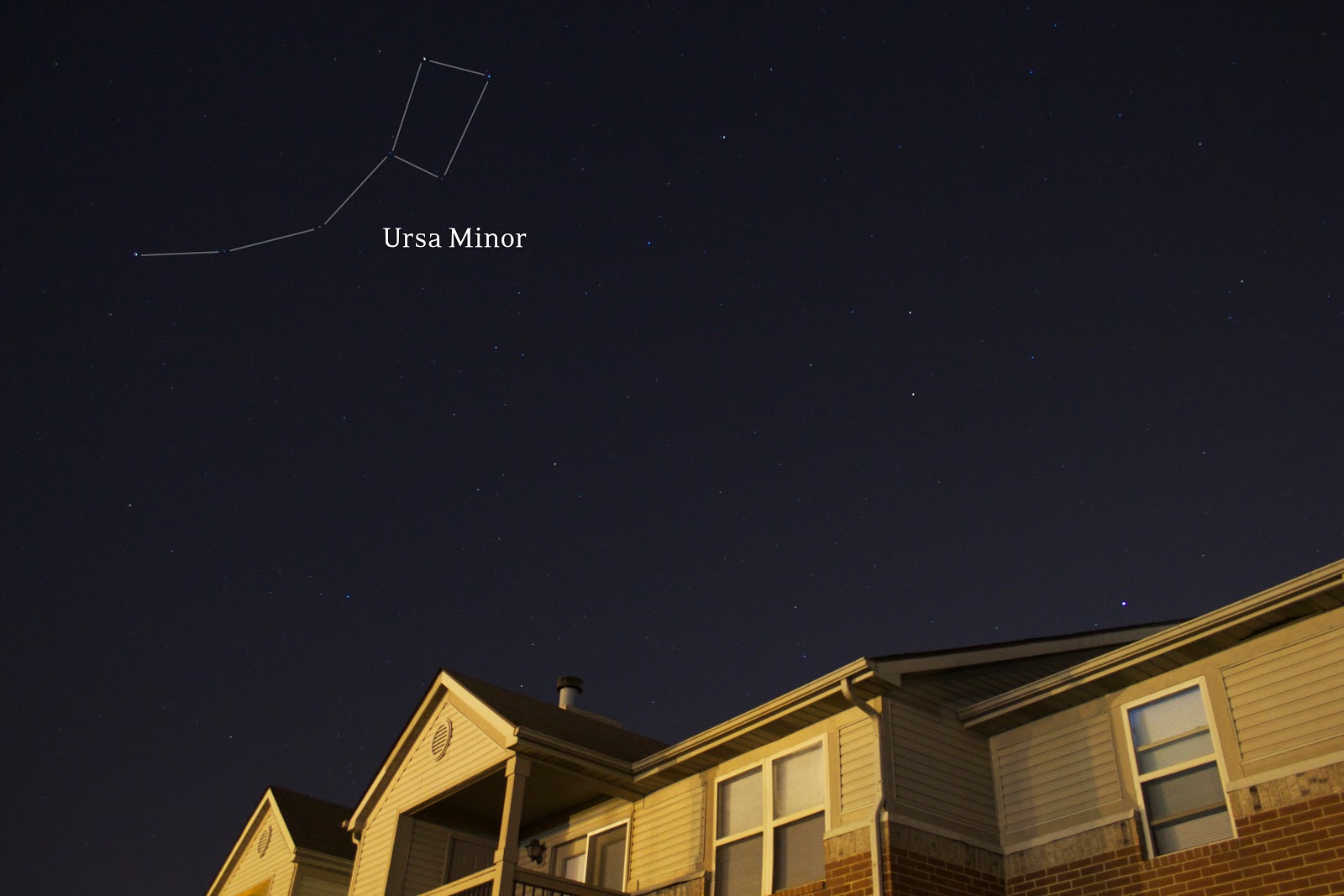
Ursa Minor Over My Apartment

There are some great views to the south this month, but turning my attention north, I got a nice shot of Ursa Minor with my apartment building. This will be a nice memento when I move into my new house and put the apartment life permanently in my rear view mirror!

ursa minor with DSLR
Single frame at f/4.5, 10 sec, ISO 800, 18mm
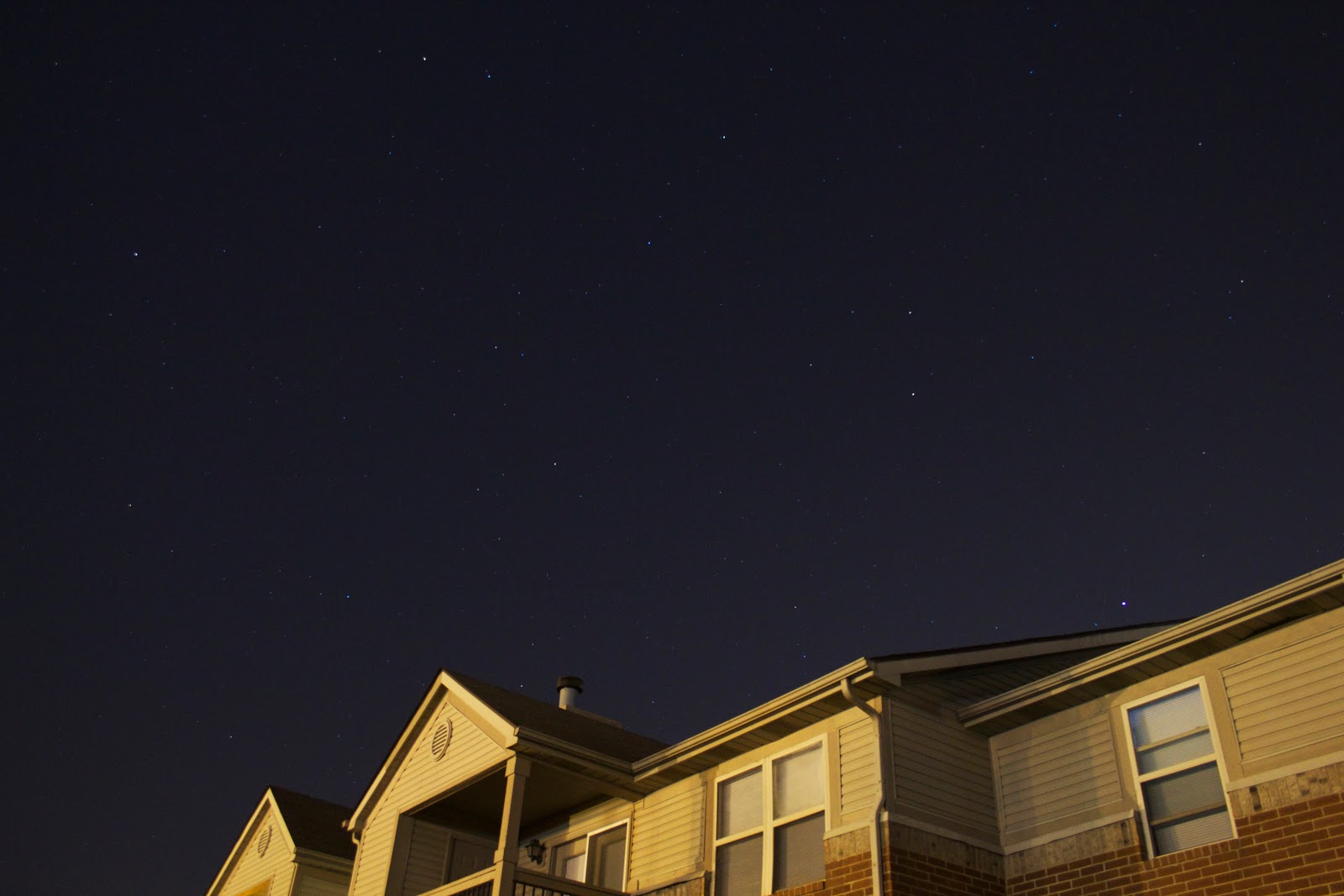
stars over roofline
Same image as above without labels

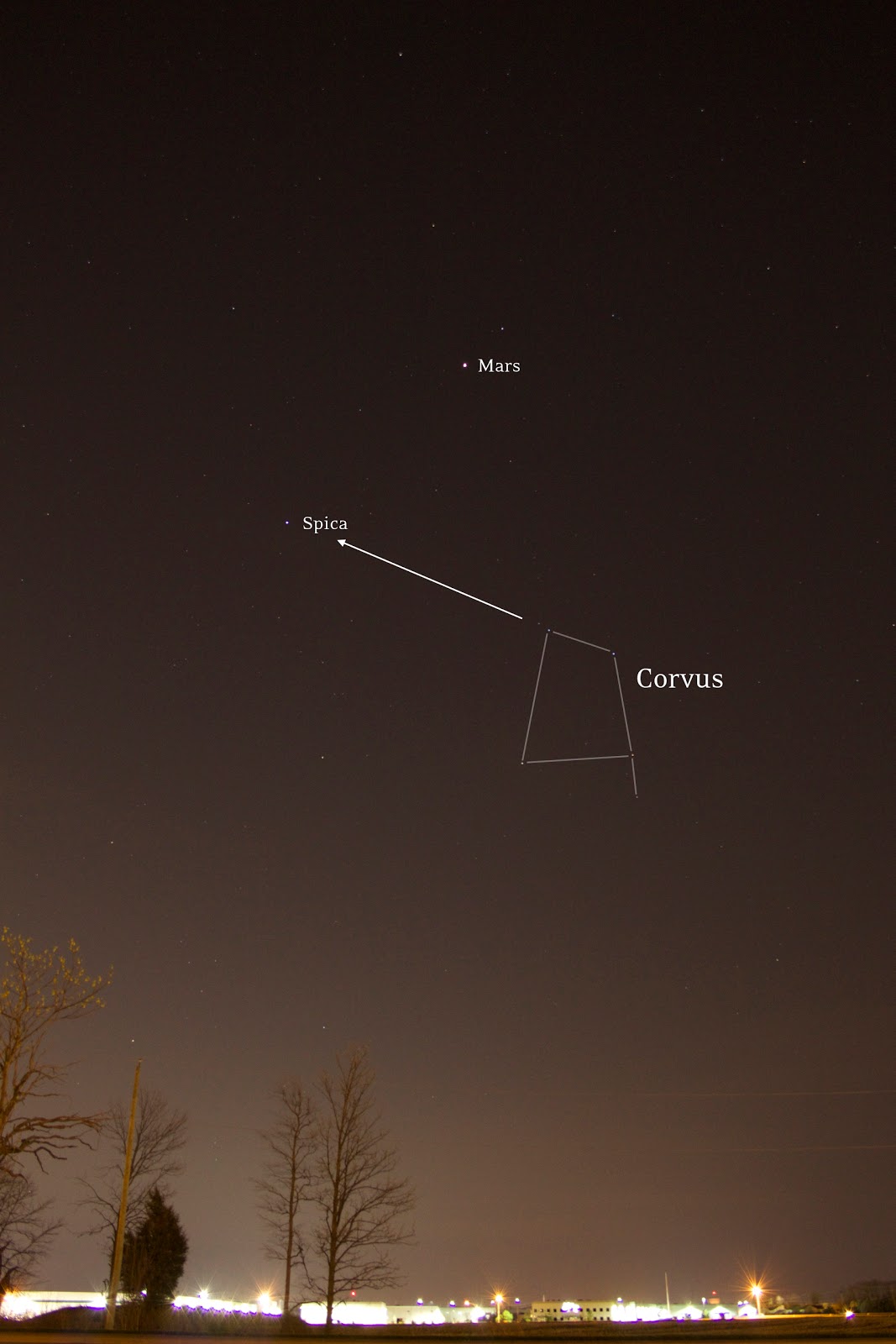
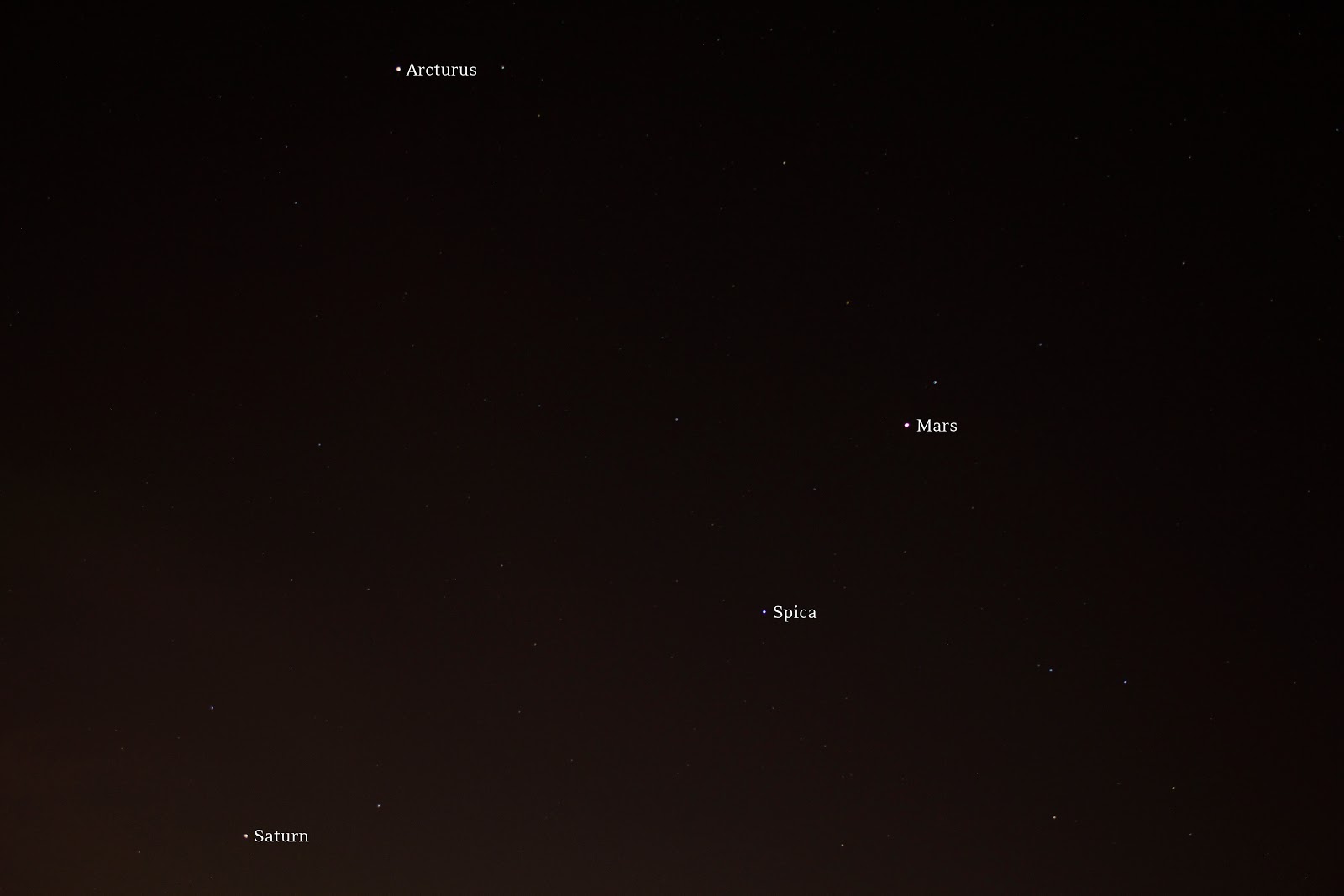
View to the South: Corvus, Virgo, Mars, and Saturn

There are some great views to the southern sky this month, with Mars blazing near Spica, and Saturn hanging out in Libra. I also got a chance to see one of my favorite smaller constellations, Corvus the crow - also known as Spica's Spanker because it resembles a type of sail called a spanker, and because two of its stars form excellent pointers for Spica.

corvus point to spica
Single frame at f/4.5, 10 sec, ISO 800, 18mm
corvus the crow spica's spanker
Same image as above without labels
Next, I wanted to see if I could fit Saturn, Mars, Corvus, and Arcturus all in the same frame. At 18mm, my calculated field of view is about 64° horizontal and 45° vertical. Currently, Arcturus is about 38° from Saturn, Saturn is about 41° from Corvus, and Corvus is about 48° from Arcturus in a big triangle. It looks like it should fit, and it does!

virgo constellation DSLR
Single frame at f/4, 13 sec, ISO 400, 18mm - Gaussian blur light pollution layer subtracted in Photoshop
corvus virgo mars and saturn
Same image as above with fewer labels

Saturday, April 19, 2014

Mars, Moon, Spica Conjunction July 5, 2014

On July 5, 2014, the night of my sister's birthday, and my friend Ryan's wedding, the Moon will be within half a degree of the planet Mars, and the pair will both be about 3 degrees from the 15th brightest star Spica. It should be a bright and interesting summer night conjunction!

The position you see here is based on my location in Indiana. In South America the moon will actually move in front of Mars. This is known as an occultation, e.g. the moon will "occult" Mars.

Every time I poke around in Stellarium I find new and interesting events. I suppose I could have just looked at the 101 Astronomical Events for 2014, but stumbling upon conjunctions is fun too.

July 5 2014 mars moon spica conjunction
Screen capture from Stellarium software

Ceres and Vesta Super Close Conjunction Flyby July 2014

Update: I was photographing Ceres and Vesta last night (5/18/2014) and noticed that Stellarium was a little off in their position. Heavens Above seems to be right on the money! Looking ahead, it looks like the Ceres/Vesta closest approach will occur around July 4-6.

ceres and vesta july 2014
Screenshot from Heavens Above showing Ceres and Vesta close conjunction

In July 2014, the 2nd largest asteroid Vesta will buzz past the 1st largest asteroid (dwarf planet) Ceres in a super close conjunction flyby. Check out these animated star chart diagrams that show the position of Ceres and Vesta during the conjunction. How close will they be? From our perspective about 2' or 3' (arcminutes) separation on the night of July 13. Don't miss the chance to observe and photograph this extreme asteroid mashup in Virgo.

Both objects should be visible in binoculars, with a small telescope, or with a nice zoom lens and DSLR camera. Vesta will be brighter at +6.4 and Ceres dimmer at +7.7 magnitude.

Here is an animation I made using screenshots from Stellarium to show the position of Vesta relative to Ceres over a period of 38 days.

animation star chart for ceres vesta conjunction
Vesta and Ceres July 2014 Conjunction - Animation of 38 screenshots from Stellarium

animation star chart for ceres vesta conjunction
Vesta and Ceres July 2014 Conjunction - Animation of 38 screenshots from Stellarium
To locate the pair of asteroids, look to Virgo and use the conveniently positioned Mars and Spica as pointers! How handy is that!

spica and mars point to ceres and vesta
Spica and Mars point to Ceres and Vesta

Saturday, January 25, 2014

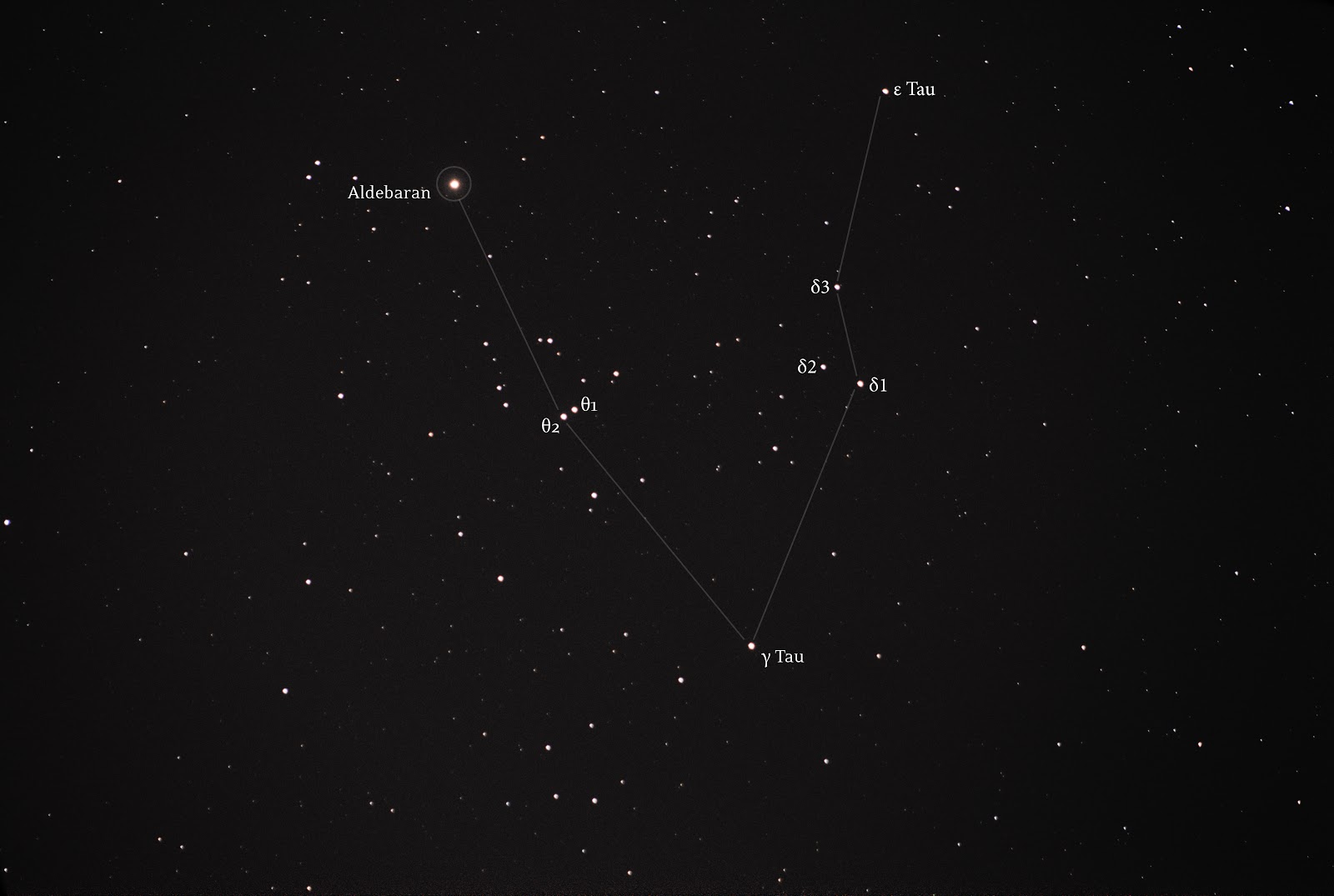
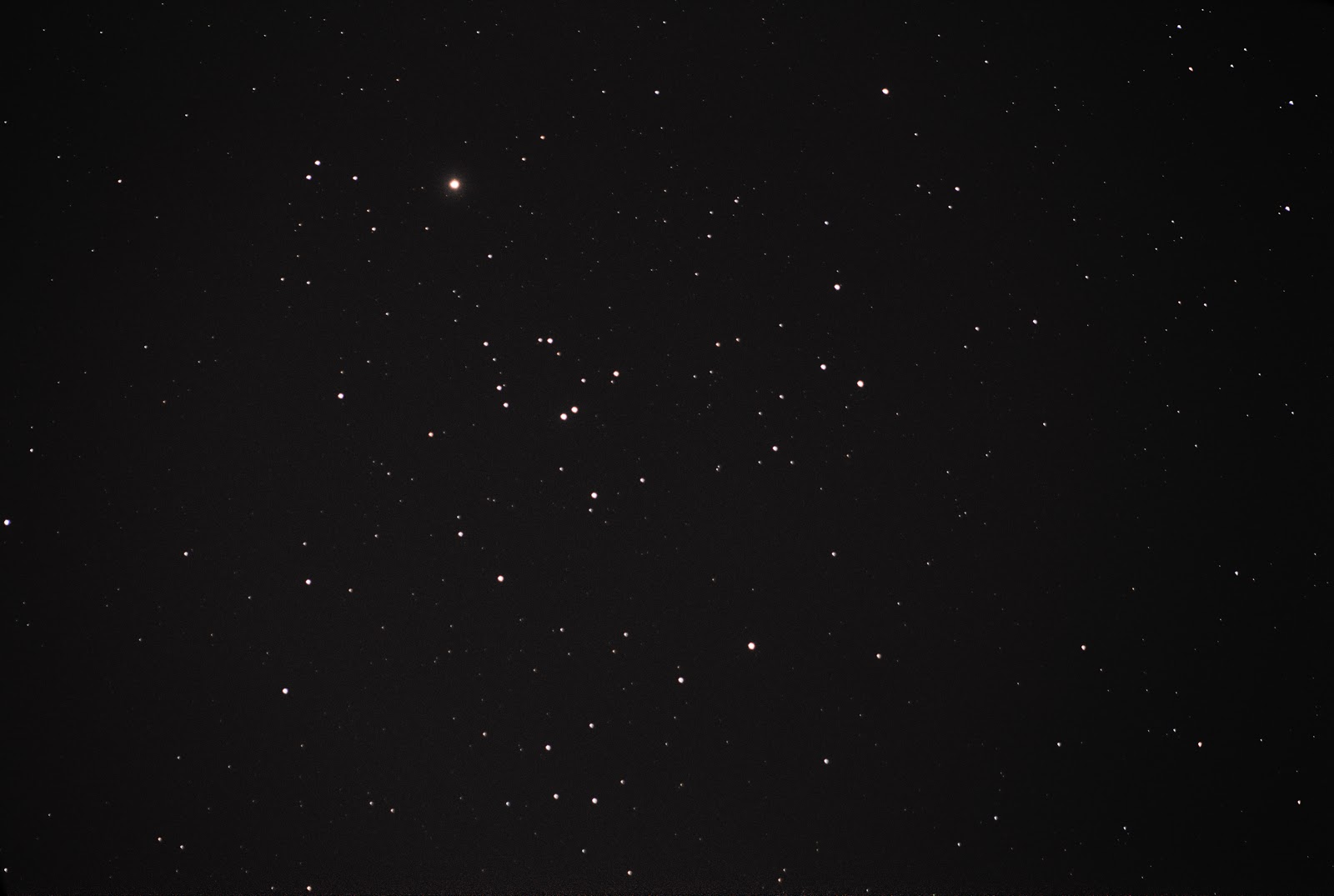
Hyades Cluster in Taurus with Major Star Labels

Another recognizable object that I've photographed before is on the IAS observing list for January. I'm happy to revisit the Hyades star cluster with my new camera! I took a series of short exposures and stacked the images in Deep Sky Stacker. Typically this brings out more stars which is great, but makes the original asterism less apparent - so I've included some labels and made a little star chart out of my final image.

hyades star cluster asterism with labels
Stack of 69 subs, 22 darks, 28 bias each at ISO 3200, 135mm, f/4.5, 2 sec

hyades star cluster in taurus
Stack of 69 subs, 22 darks, 28 bias each at ISO 3200, 135mm, f/4.5, 2 sec

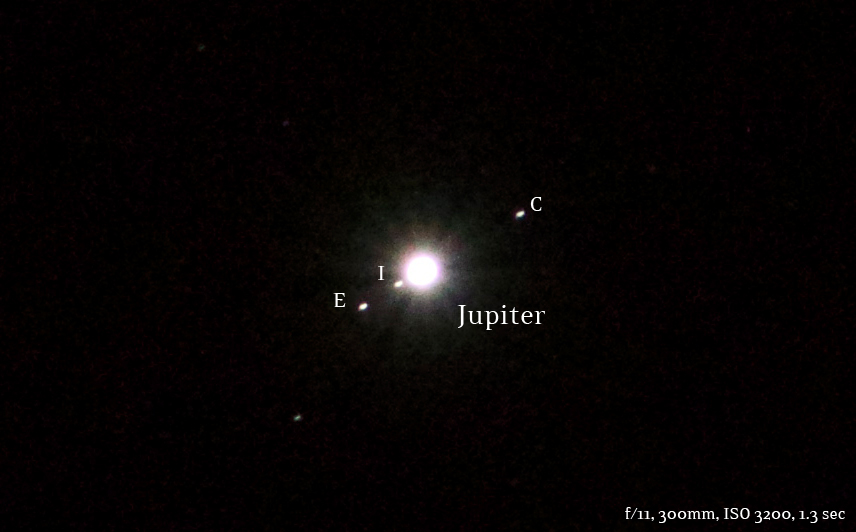
jupiter and moons on january 21
Crop of Jupiter at f/11, 300mm, ISO 3200, 1/3 sec

That same night I also snagged a quick photo of Jupiter with my T5i on a fixed tripod. Still waiting for some warmer weather to take my mount out to play with it. It's going to be a low of -17°F on Monday. This winter is the worst!

Saturday, December 14, 2013

Geminid Meteors with Canon Rebel XT over Indiana, December 13, 2013

This was my second time photographing the Geminid meteor shower. After coming up short after 3 nights of shooting last year (1 good meteor candidate), I was ready for another try. The forecast called for a huge snow storm to roll through the night of December 13-14 (the peak night). However, the night of December 12-13 was clear for the most part.

I went to see The Hobbit double feature in IMAX 3D with my brother, and after being in the theater from 7pm - 3am I wasn't in any mood to do some serious star photography, especially with work in the morning. I knew I would regret it if I didn't at least TRY to catch some Geminids the day before the peak, and am I ever glad I did! The bright moon was setting, and I had the benefit of a remote shutter lock this year (compared to taping the shutter down last year). 

I watched the photos download onto the computer, and didn't see any meteors in the thumbnail images. I took 381 photos total, each at ISO 800 (couldn't go to 1600 because of light pollution), 18mm, f/4.0, 15 sec each. My camera clicked away on the balcony from 3:21 AM to 5:06 AM when the battery finally died in the cold. 

When I finally looked through all the photos "by hand" on the computer one at a time, I was thrilled! Not only did I have a good "candidate" for a meteor, I had TWO very obvious meteors originating out of the constellation Gemini. Jackpot!

Geminid Meteors december 13
A Geminid meteor between Gemini and Canis Minor, it appears to be originating out of Jupiter near the center of the contellation

Geminid Meteors december 13
A Geminid meteor to the right of Gemini, this one's trail appears to originate out of top of the constellation between Castor and Pollux. I can't believe I nabbed this one just 2 min before my battery died!

geminid meteor composite
Composite of the two images above, color and contrast messed with in Photoshop

Sunday, December 1, 2013

Lyra Constellation with Star Labels, DSLR with 110mm Lens

lyra labels 110mm
3 min 7 sec exposure comprised of 75 subs, 40 darks, 40 bias, each at ISO 1600, f/5.6, 110mm, 2.5 sec
Before Lyra sets in the evening sky for the season, I wanted to get a good stack of the entire constellation. My result was the equivalent of a 3 minute exposure using 75 light frames at 2.5 seconds each (longer than the typical 1.3 sec because I wasn't zoomed in as far).

The faint Ring Nebula is visible as a blurry dot in the base of the harp, and double stars abound throughout the constellation.

Astrometry was helpful in wrapping my head around the raw image with its useful labeling tool. Here is the resulting image from the site.

lyra labels 110mm
Labels added using Astrometry