Wednesday, May 28, 2014

Seeing Tiny Rainbows Near the Sun Makes You a Sundog Millionaire

small rainbow near the sun
Single frame, increased saturation, ISO 100, 1/2500 sec, f/5.6, 18mm
 
small rainbow near the sun
Single frame, increased saturation, ISO 100, 1/2500 sec, f/5.6, 44mm

What is that small rainbow near the sun? And that faint rainbow above it in the clouds?

A sun dog, phantom sun, mock sun, or parhelion, is a light appearing in the sky at the same elevation as the sun and 22° away from the sun. The distance from the sun is always the same because hexagonal ice crystals in the atmosphere refract the light at a consistent angle.

Sundogs are members of a larger family of halos created in this way, and can appear as pillars, small rainbows, or arcs that form a halo around the sun.

This was just a little guy - check out my parhelia pillars and lunar halo photos!

Sunday, May 25, 2014

M94 and M53 with DSLR for May Observing List

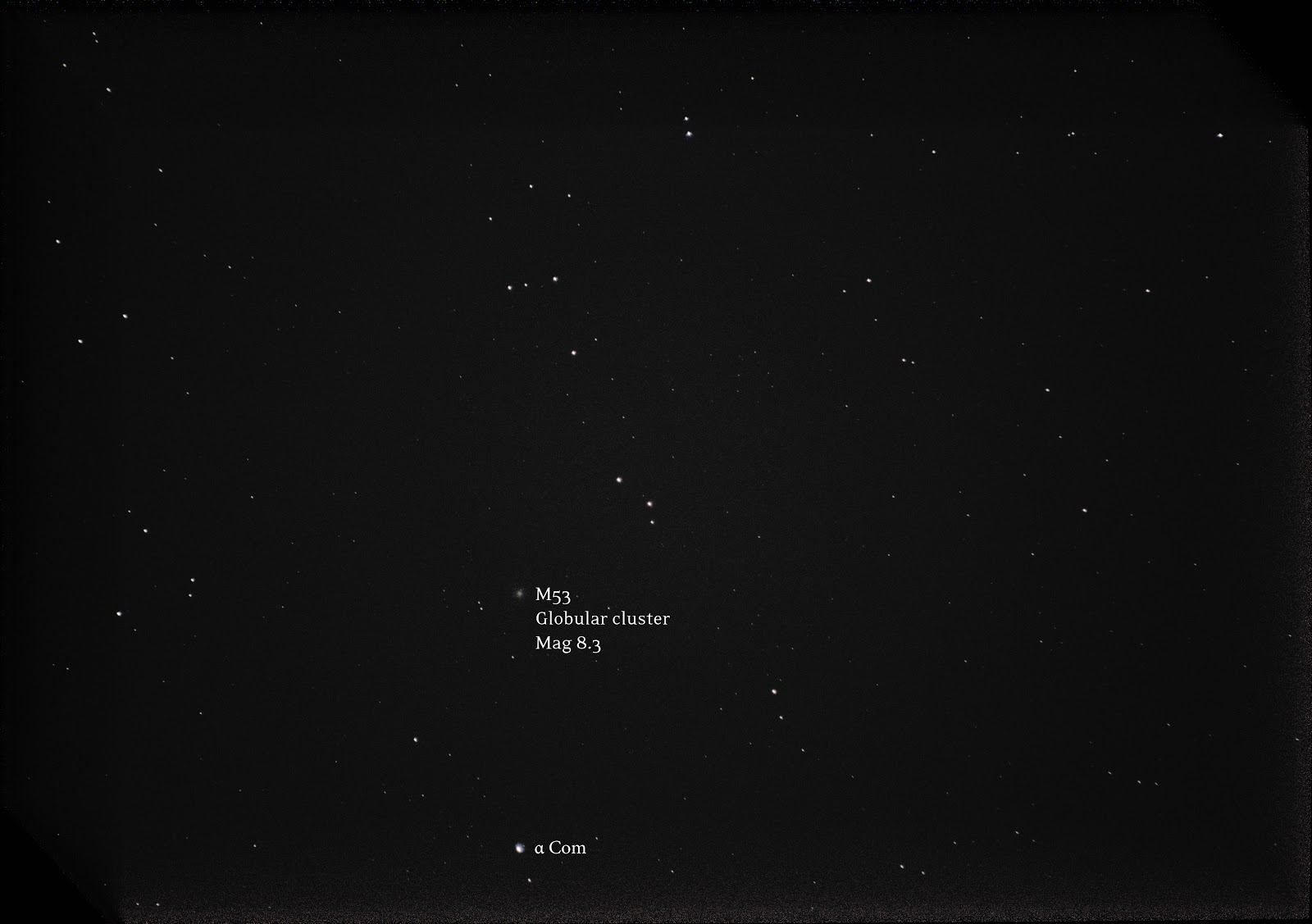
The May Observing List motivated me to catch M53 for a second time, and M94 for my first time. Just like last time, I used α Com just below M53 as an anchor star to help me compose my shot in a way that would let me take multiple photos back to back while keeping the blob in frame.

M53 messier object
1 min 22 sec total exposure, stack of 82 subs, 71 darks, 53 bias at ISO 6400, 1.3 sec, 300mm, f/5.6


M53 messier object
Original (uncropped) same as above

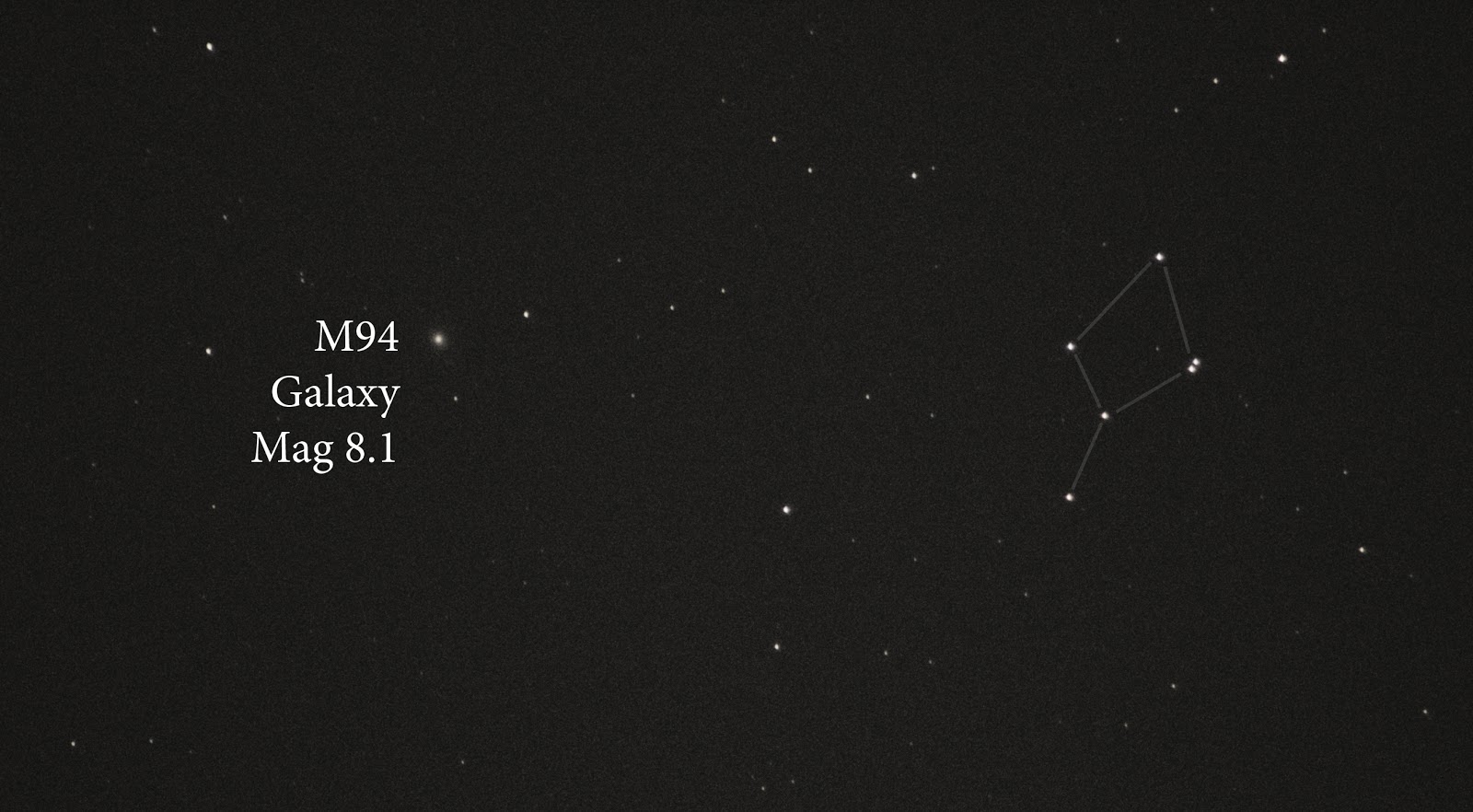
M94 was new to me, but I located it without much trouble. There is a small asterism (6 stars, each around mag 8.5) only 1° from M94 that looks like a kite or a magnifying glass. Composing my shot based on this asterism made it much easier to ensure M94 stayed in frame while taking multiple photos back to back.

M94 messier object
Stack of 195 subs, 71 darks, 53 bias, ISO 6400, 1.3 sec, 300mm, f/5.6
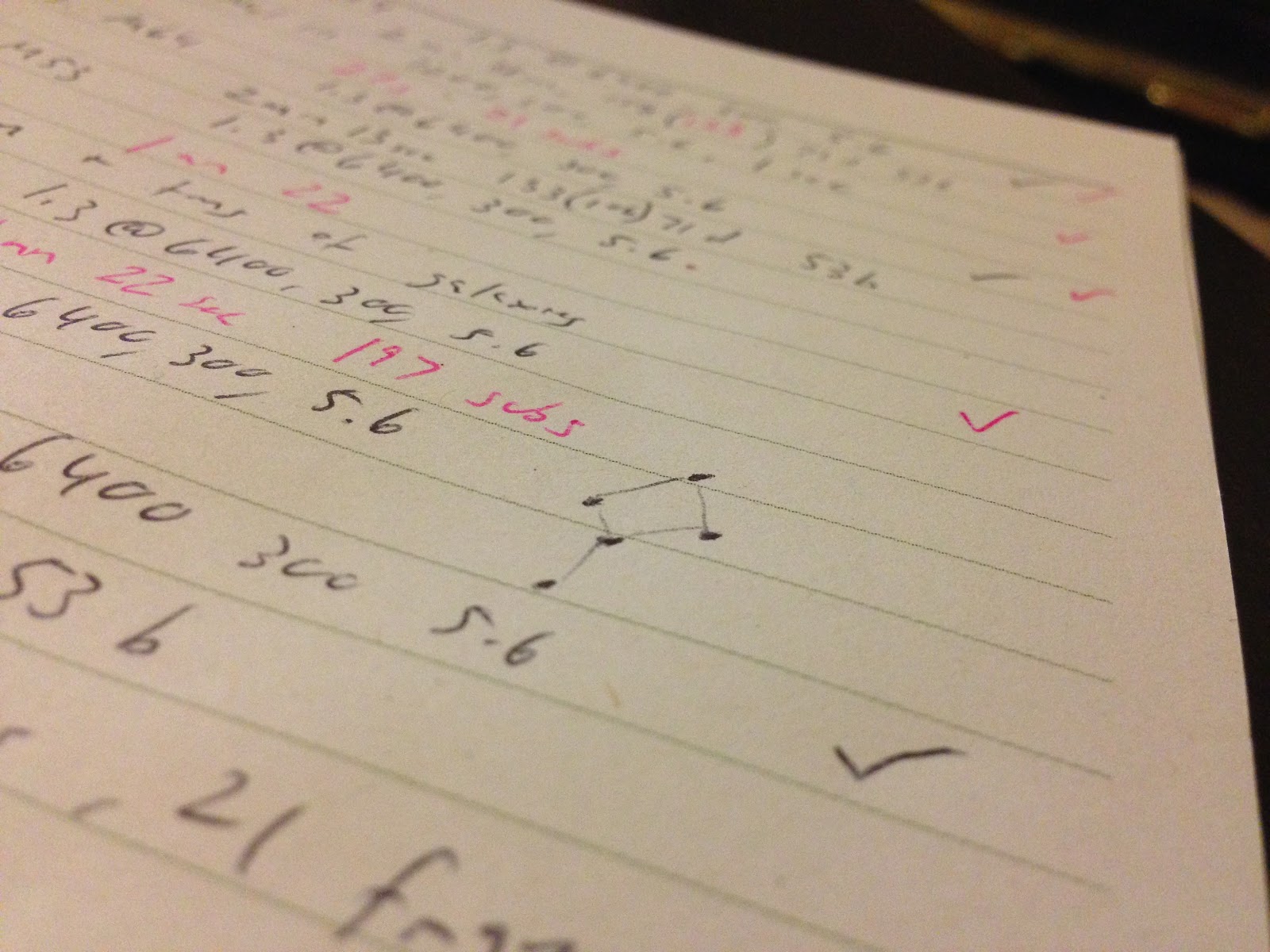
The asterism was obvious enough for me to make note of it in my observing notes, which mostly consist of acquisition settings for my DSLR. Whenever I do a bunch of Messier Objects in the same night, I can't always tell them apart until after processing - so I started writing down the order and settings for each one

asterism near M94
My asterism reminder in my observing notes
. 
M94 brings my Messier total to 63 objects!

Meteor Hunting Consolation Prize: Beautiful Star Trails

I had two cameras out last night for what's being called the Camelopardalids, the first meteor shower produced from Comet 209P/LINEAR dust. My DSLR ended up catching a bright meteor that left a puff of smoke hanging in the air for 2 minutes. My point and shoot caught the smoke but missed the actual meteor flash.

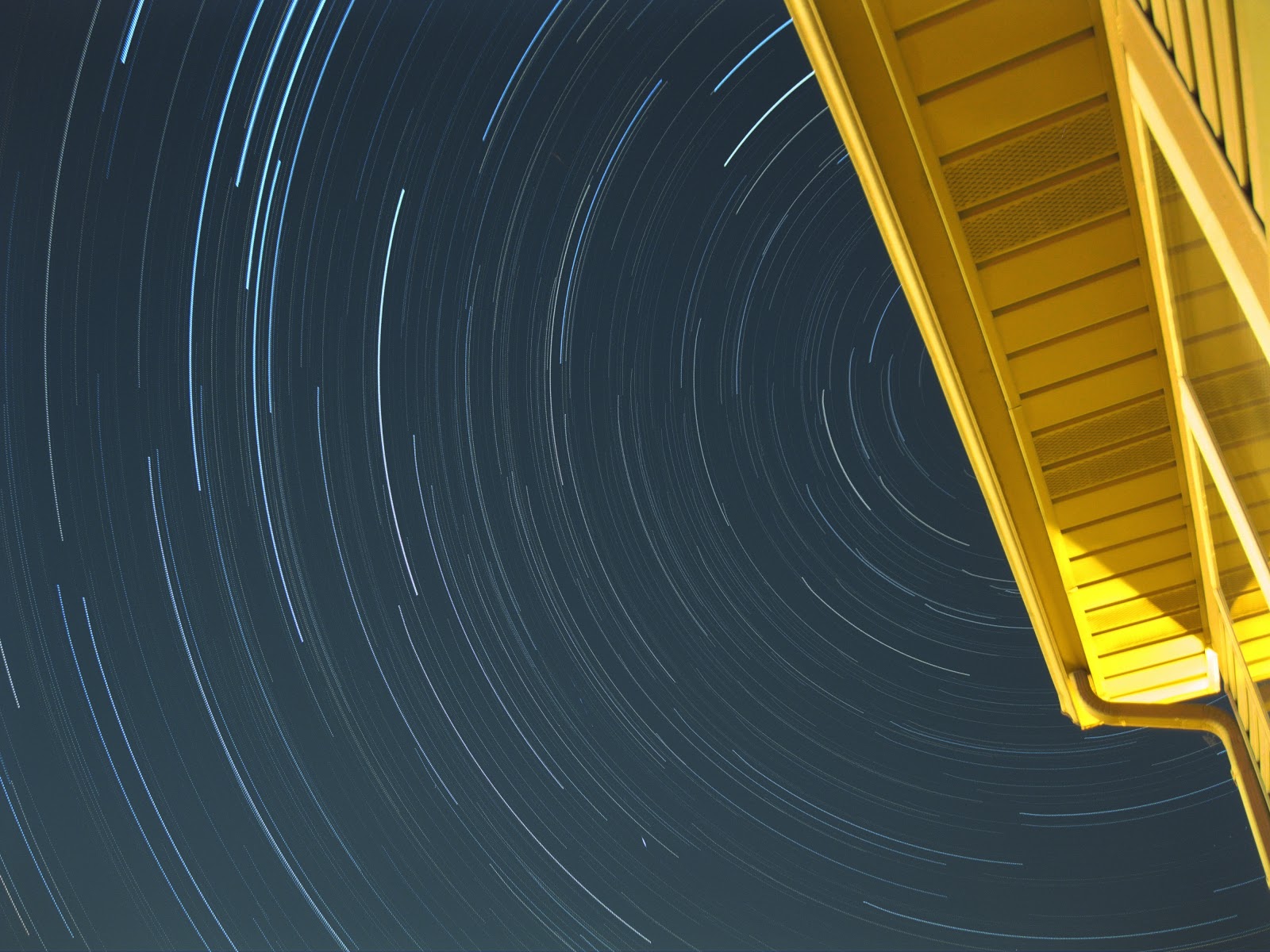
Both cameras produced hundreds of photos of the night sky from fixed tripods - which make for excellent star trail photos once stacked using free StarStaX software.

My point and shoot produced 252 usable frames, which is typical of its battery life. I get fewer in winter when the cold drains the battery faster, but in 50°F air this was normal. My DSLR was set to JPEG instead of RAW to allow for as many photos as possible. I only ended up with 850 images over about 3 hours. I suppose I could have used RAW format for this, because it didn't come close to filling up my 64GB memory card.

I still need to learn to tether my DSLR to my laptop and buy an AC adapter for unlimited shooting! But for now, 3 hours in the can is a good chunk of time.

Ugh, I just realized as I was typing my photo specs into the pics below that I had my camera stopped down for no good reason. I could have opened it up to f/4.5 for some brighter images. Oh well! On a positive note, I didn't have to Photoshop any planes out of the images because there were only a couple and they just so happened to fly in the general direction of the star paths. Can you spot them?

DSLR star trails
Stack of 850 photos, each at ISO 800, 18mm, f/5.6, 15 sec
Canon T5i

point and shoot star trails
Stack of 252 photos, each at ISO 800, 6.2mm, f/2.7, 15 sec
Canon PowerShot A3100 IS

Saturday, May 24, 2014

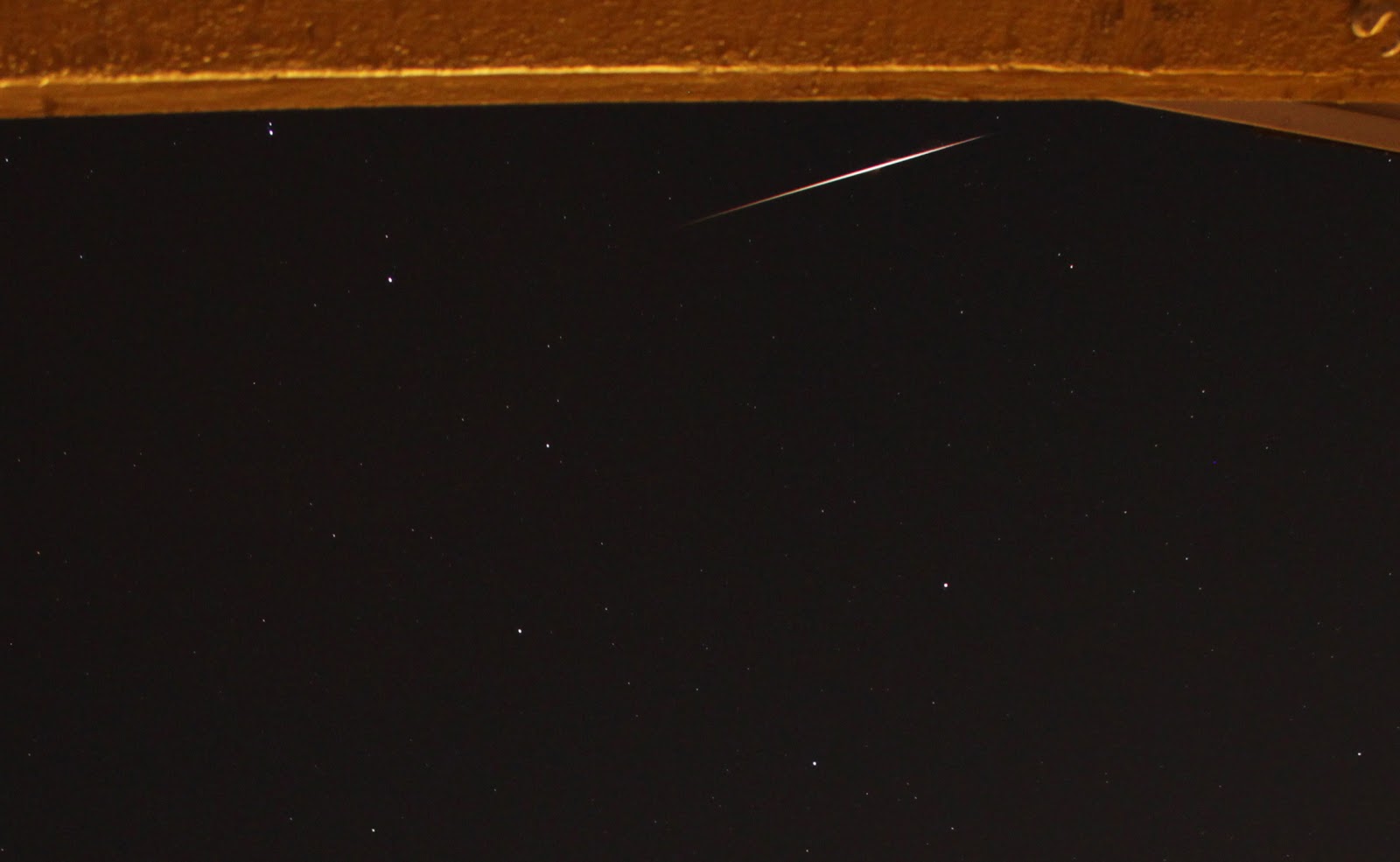
Camelopardalids Meteor Fireball with Smoke Trail Animated GIF

Camelopardalids meteor with smoke trail
Camelopardalids meteor with smoke trail - Click to enlarge!
10 frames each at ISO 800, 18mm, f/5.6, 15 sec
Canon T5i
Camelopardalids meteor
Camelopardalids meteor - single frame same as above

Camelopardalids
Same thing with the brightness turned up a bit... Click to enlarge!

Camelopardalids smoke trail
Camelopardalids smoke trail - Click to enlarge!
8 frames each at ISO 800, 6.2mm, f/2.7, 15 sec
Canon PowerShot A3100 IS (Point and Shoot)

I took the shots above from my balcony in Brownsburg, Indiana on May 24, 2014 at 12:04am. Each frame is a 15 second exposure (there were only 8 frames from the point and shoot because it has longer processing time). The smoke trail was visible for roughly 2 minutes based on the camera timestamps. I had no idea they stuck around that long!

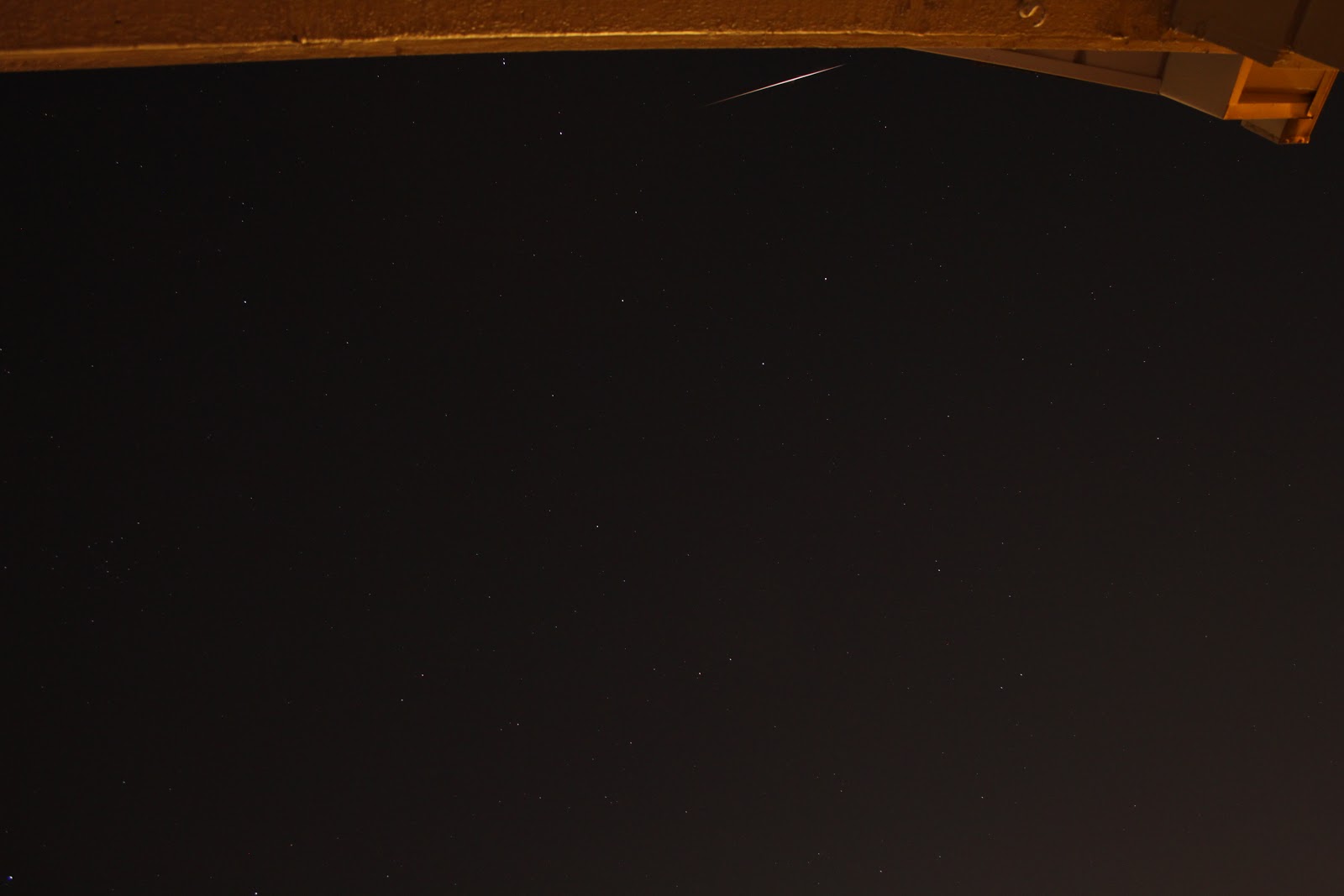
Images are cropped from their original size. Here is a single frame straight out of the camera (below).

Camelopardalids Meteor canon t5i
Single frame (uncropped) straight from camera
Canon T5i at ISO 800, 18mm, f/5.6, 15 sec

Tuesday, May 20, 2014

Ceres and Vesta Movement in 24 Hours Animated GIF

I'm so totally pumped! I wanted to create an animation showing the movement of asteroids Ceres and Vesta. I lucked out and got 2 clear nights in a row with Ceres and Vesta in the same frame! I toggled back and forth in Photoshop to create a 2 frame animated GIF of their change in position.

ceres and vesta movement in 24 hours animated gif
Stack of images from fixed tripod on consecutive nights
ISO 6400, 300mm, f/5.6, 1.3 sec

There they go! Sailing through the night sky! I'm so pleased with how this came out, particularly because it took so much work to make. Each frame is a series of exposures stacked in Deep Sky Stacker (27 frames and 16 frames respectively). The sky was in a slightly different position, so I had to rotate to align the 'fixed' background stars, add arrows and labels, and animate it.

Any apparent movement in background stars is a result of me not aligning the images precisely - although the stars are moving relative to each other ever so slightly, there's no way my camera would detect the tiny movements in 24 hours (or even hundreds of years for that matter).